
Losing one or more teeth — through decay, gum disease, an injury, or simply as part of getting older — almost always raises the same question in the consultation room: “so, doctor, does this stay fixed, or is it a piece I take out and put back in?” It’s a fair question, because the right answer changes from person to person, and it directly affects your comfort, your budget, and how soon you’ll go back to eating and smiling without thinking about it.
This article explains the difference between a removable and a fixed dental prosthesis, the advantages and limitations of each, and the factors that matter when deciding which option is right for your case.
Common situations where this decision comes up
This question comes up in very different contexts, and the right answer changes depending on where each person is starting from:
- You’ve lost a single tooth — for example, following an injury or an extraction — and want to know whether a fixed implant is worth it, or whether a simpler solution will do, at least for now.
- You’ve lost several teeth over the years, gradually, and have reached a point where chewing is no longer comfortable, but you’re still not sure whether a broader rehabilitation is worthwhile.
- You’ve worn a removable prosthesis for several years and feel it no longer fits well, becoming unstable when speaking or eating, and want to know if there’s a more permanent alternative.
- You’re about to lose, or have already lost, all the teeth in one arch, and are deciding between a traditional full denture and a fixed rehabilitation on implants.
- You’re wary of surgery or working with a tighter budget right now, and want to know whether the removable route is a sensible option, even if temporary, until you’re ready for a fixed solution.
What is a removable prosthesis
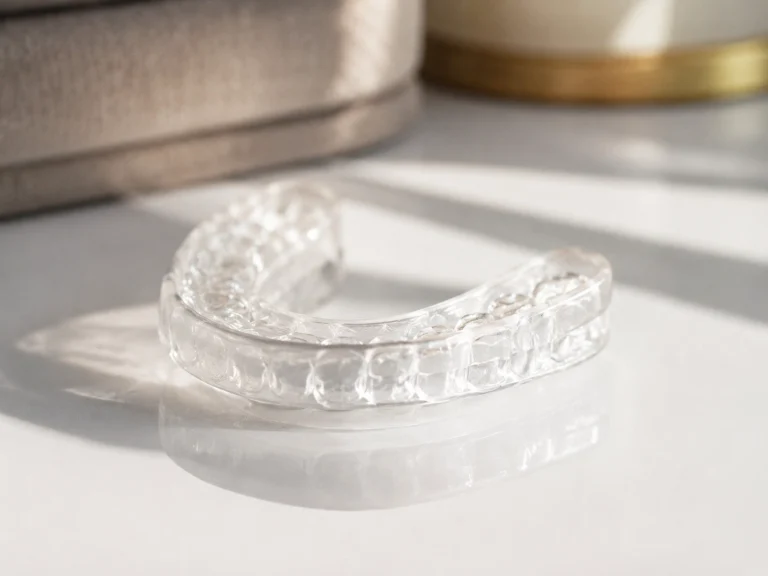
A removable prosthesis is a piece that replaces one or more teeth, which the patient inserts and takes out themselves, usually at night and for cleaning. It can be complete, when it replaces all the teeth in one arch, or partial, when it replaces only some teeth and rests on the remaining natural teeth, usually through small clasps or discreet attachments.
It’s historically the more accessible solution and the one with the simpler process — it doesn’t involve surgery or, in most cases, reshaping healthy teeth. On the other hand, it tends to offer less stability than a fixed prosthesis: it can move slightly when speaking or chewing, especially in the early adjustment period, and usually needs periodic adjustments as the gum and the bone underneath it change shape over the years.
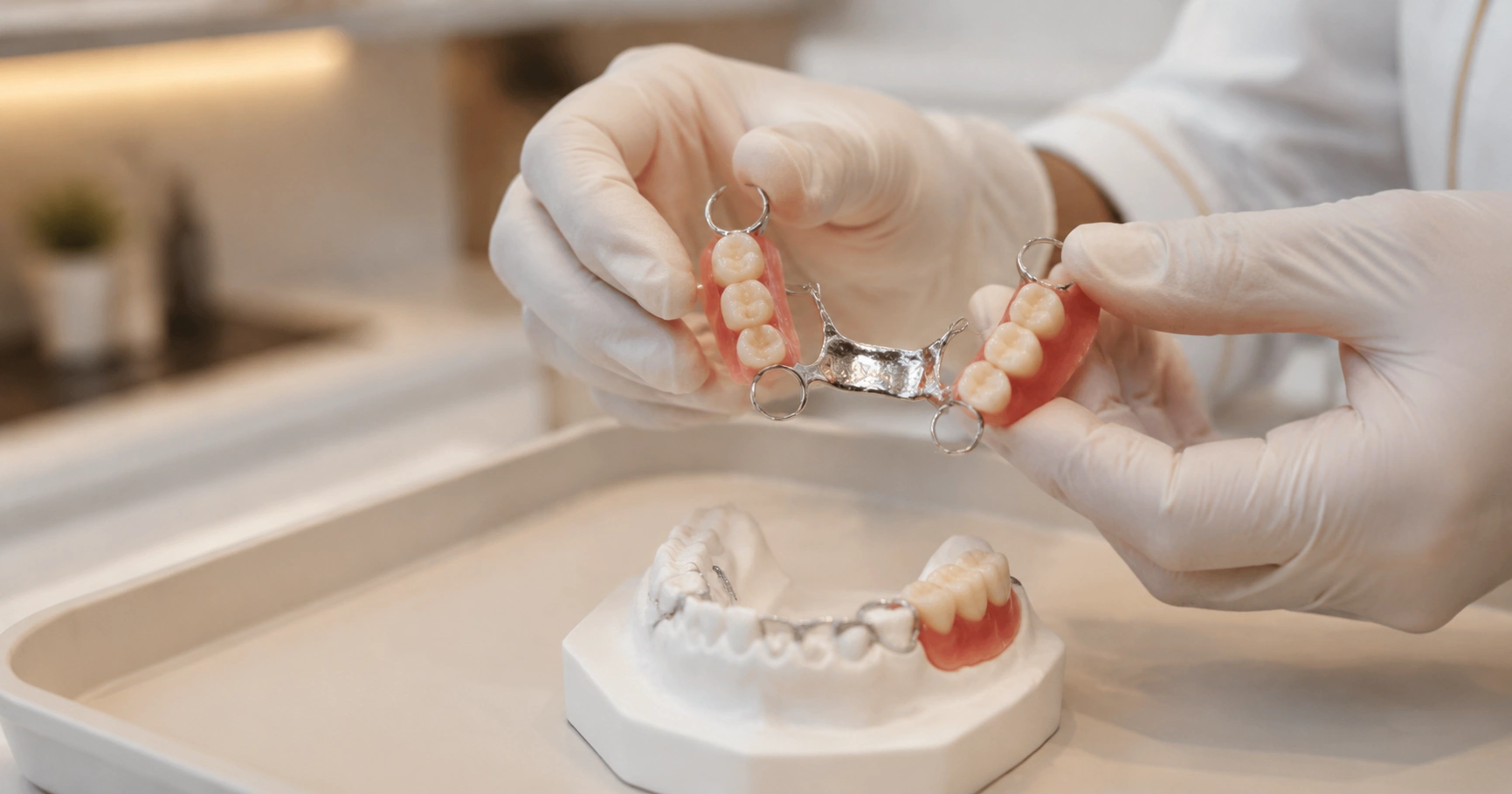
Removable partial denture — rests on the natural teeth through small attachments.
What is a fixed prosthesis
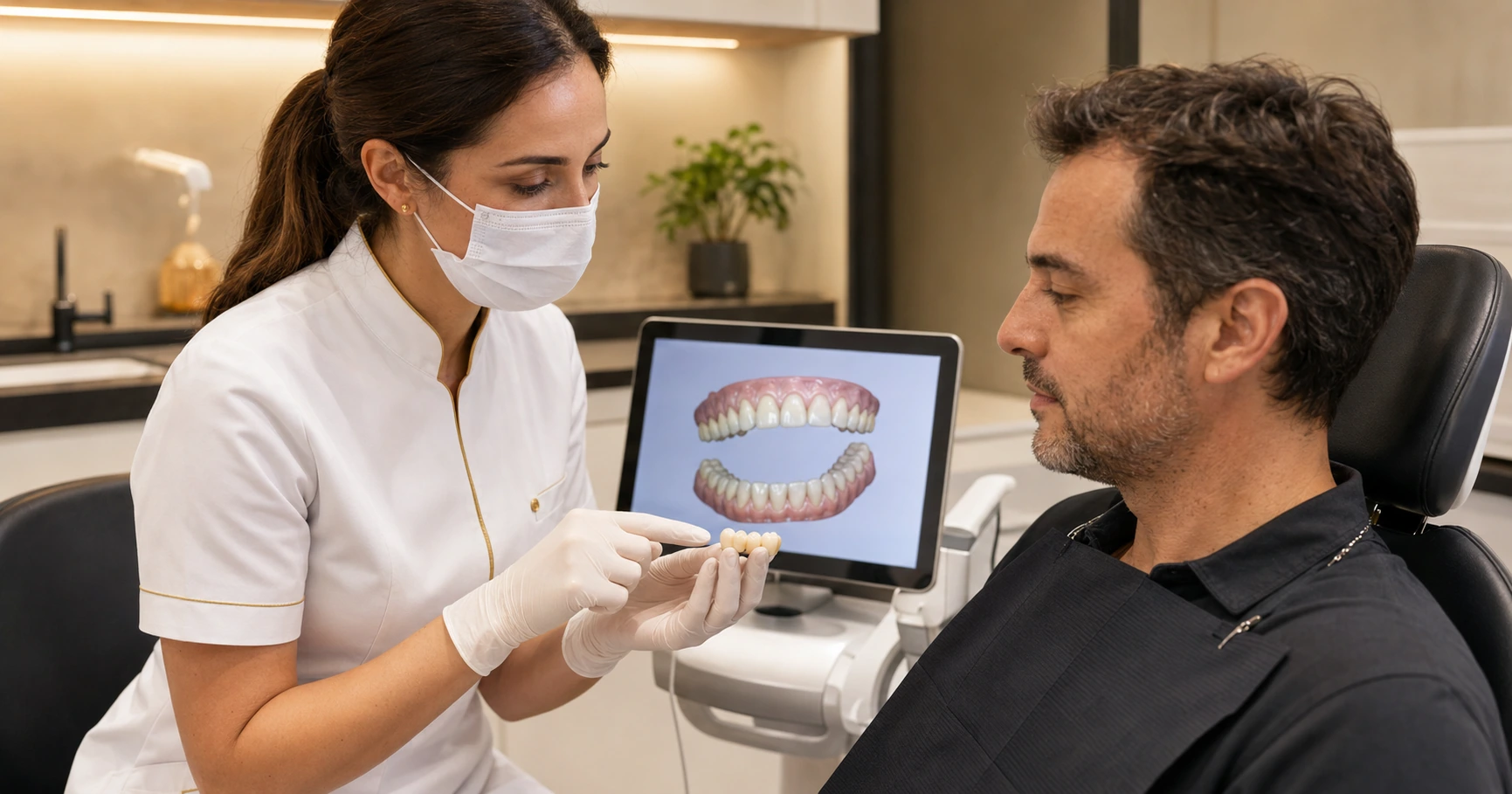
A fixed prosthesis is cemented or screwed in place and isn’t removed day to day — it functions, in practice, like a permanent tooth (or set of teeth). It can rest on natural teeth prepared for that purpose, as with a classic dental bridge, or on dental implants, when there aren’t enough teeth to serve as support or when the goal is to avoid reshaping healthy teeth.
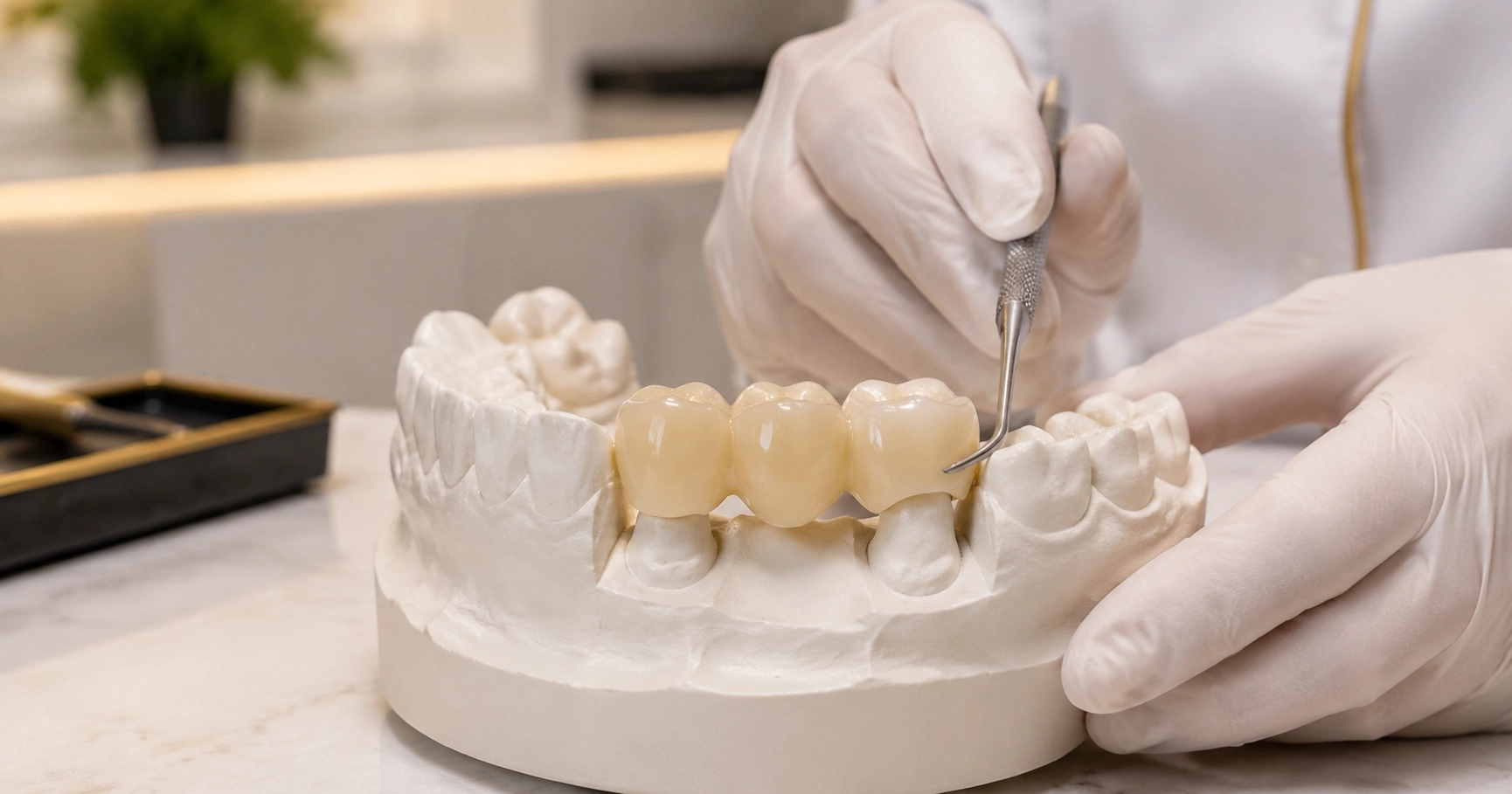
Fixed bridge on prepared natural teeth — not removed day to day.
When tooth loss is more extensive, or total, a fixed prosthesis on implants — such as the All-on-4 system we covered in another article — makes it possible to recover a full arch of fixed teeth, with no removable piece at all, and a chewing force very close to that of natural teeth. It’s generally the option that comes closest to the feeling of “having your teeth back” — but also the one involving a higher investment and, in most cases, implant placement surgery.
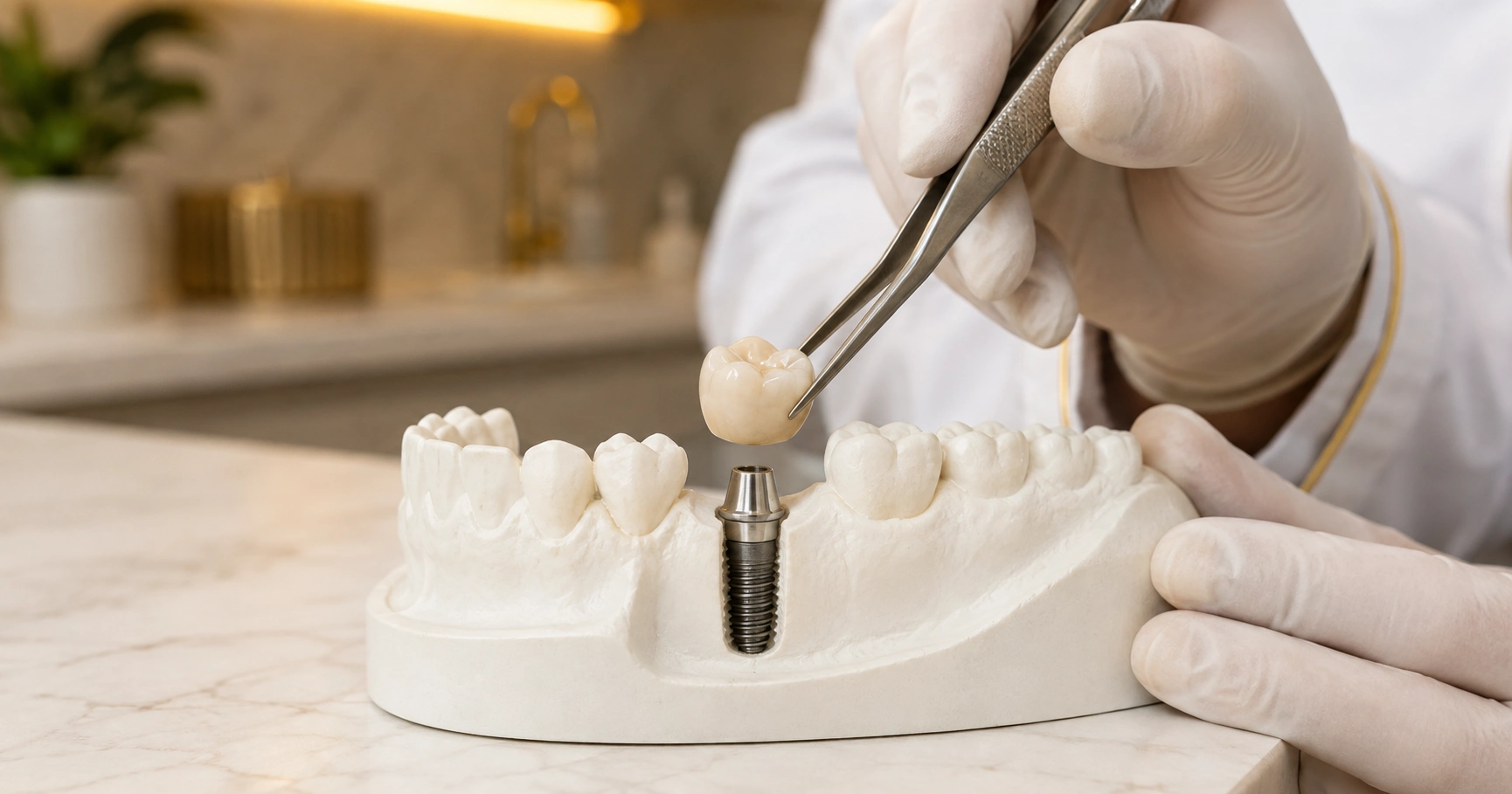
Fixed crown on an implant — when there isn’t enough natural tooth to serve as support.
Main differences between the two solutions
Summing up what matters most in the decision:
- Stability and chewing function: a fixed prosthesis comes closer to the strength and feel of natural teeth; a removable one is functional, but with more limitations, especially with harder or more fibrous foods.
- Day-to-day comfort: a fixed prosthesis isn’t removed and needs no adhesives; a removable one requires some adjustment and specific hygiene care, but can be taken out whenever the patient prefers.
- Investment: a removable prosthesis generally has a lower upfront cost; a fixed one, especially on implants, represents a larger investment, but usually requires less maintenance and fewer replacements over the years.
- Clinical process: a removable prosthesis doesn’t require surgery; a fixed one on implants involves a surgical procedure and a bone integration period before the final stage.
- Durability: a well-maintained fixed prosthesis tends to last more years without needing to be remade; a removable one usually needs adjustments or replacement more regularly.
Neither option is, in absolute terms, “better” — they’re different solutions for different situations, and the right answer depends on your specific case.
How to decide which option is right for you
There are several factors that go into this decision, and they only become clear during an in-person assessment:
- How many teeth are missing — the solution for a single tooth is different from the solution for a full arch.
- The amount and quality of available bone — determines whether implants are feasible without additional procedures.
- Your available budget and how you’d prefer to spread that investment over time.
- Your oral hygiene routine and dexterity — a removable prosthesis requires specific, regular cleaning care.
- Your expectations for comfort and naturalness — for those who value, above all, not feeling a “foreign object” in the mouth, a fixed solution tends to be more suitable.
To learn more about the dental prosthesis solutions available at Porto Smile, including removable prostheses, bridges and fixed rehabilitations on implants, visit our dedicated page.
How we carry out the assessment at Porto Smile
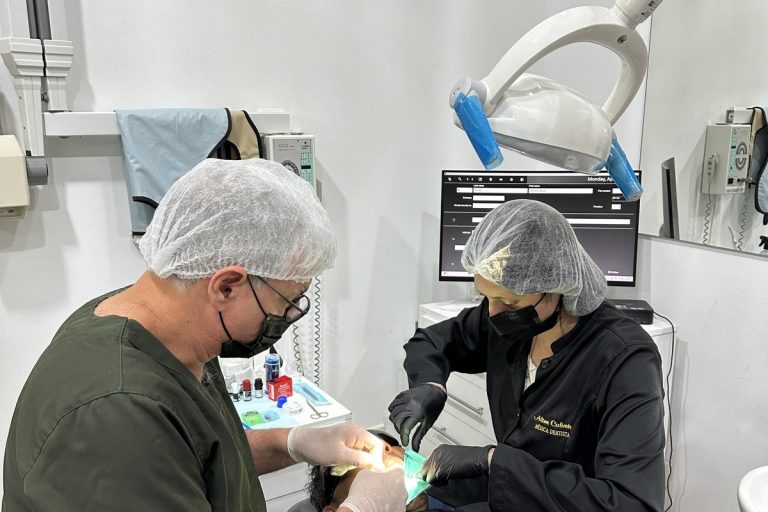
The consultation always starts by understanding your specific situation: how many teeth are missing, for how long, and what you’ve already tried or considered. We take a digital reading of your mouth and, when necessary, X-rays or a CT scan, to assess the amount of available bone and plan the most suitable solution.
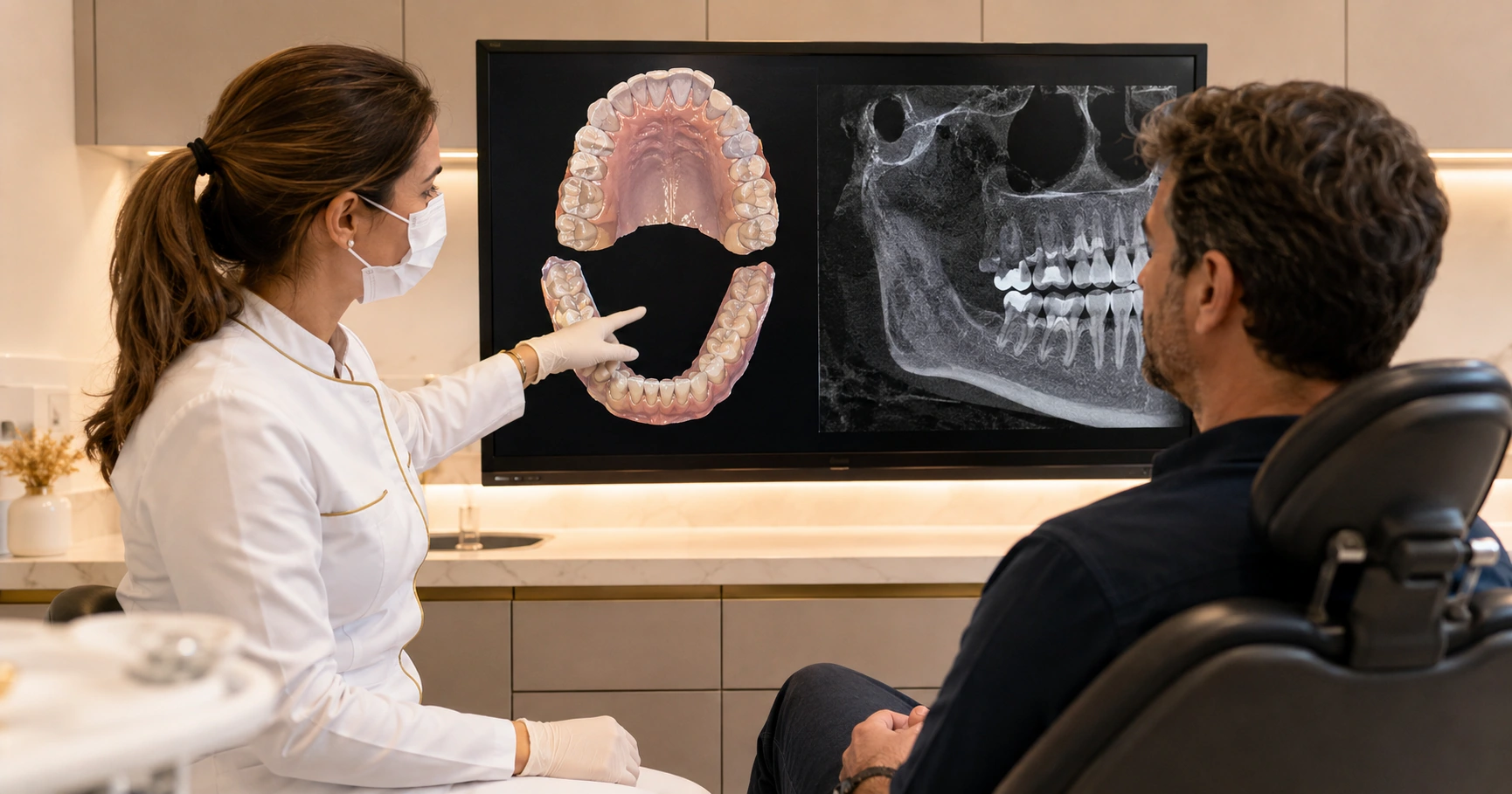
Digital scan and CT scan — the basis for planning the most suitable solution for each case.
From there, we present the realistic options for your case — removable, fixed on natural teeth, or fixed on implants — with the advantages, limitations and timelines of each explained in plain language, so the final decision is yours, with all the information you need.
Frequently Asked Questions
Is a removable prosthesis visible when I speak or smile?
Made and adjusted correctly, a modern removable prosthesis is discreet and hard to notice. The clasps on a partial prosthesis can be positioned to stay as hidden as possible.
Does a fixed prosthesis on implants hurt?
Implant placement is done under local anaesthesia, just like other dental procedures, and post-operative discomfort is, in most cases, similar to that of a tooth extraction — manageable with the usual medication.
Can I move from a removable to a fixed prosthesis later on?
Yes, this is a common situation. Many patients start with a removable solution, for budget or time reasons, and later opt for a fixed rehabilitation on implants once the conditions are right.
How long does a removable prosthesis last?
It depends on the care taken and the natural changes in the mouth over time, but it usually needs adjustments or has to be remade every few years, as the gum and the bone underneath it change.
How long does a fixed prosthesis on implants last?
With good oral hygiene and regular maintenance appointments, a fixed rehabilitation on implants can last many years, in many cases decades, and is today considered a long-term solution.
Does Porto Smile provide removable and fixed prostheses in Matosinhos?
Yes. We provide full assessment, planning and rehabilitation with removable prostheses, fixed bridges and implant-supported solutions, including All-on-4. Call +351 229 388 709 to book an appointment at Rua Germano da Paiva 10, Matosinhos.
Is it possible to combine both solutions in the same mouth?
Yes, this is a frequent situation. For example, you might keep a fixed prosthesis on implants on one side of the arch and a removable partial solution on the other, depending on the number of missing teeth and the bone available in each area. The treatment plan is always designed around your specific situation, not a single choice for the whole mouth.
Have questions about this topic? Our team is here to help.
Book a Consultation