
Do you wake up with a sore jaw or headaches for no apparent reason? It could be bruxism — and, in most cases, everyday stress plays a central role in it.
Bruxism is the involuntary habit of grinding or clenching the teeth, whether during sleep or in moments of tension throughout the day. It is one of the most common problems we see at Porto Smile, and also one of the most underestimated — many people only discover they suffer from bruxism when the dentist identifies the wear on their teeth during a routine appointment.
What Bruxism Actually Is
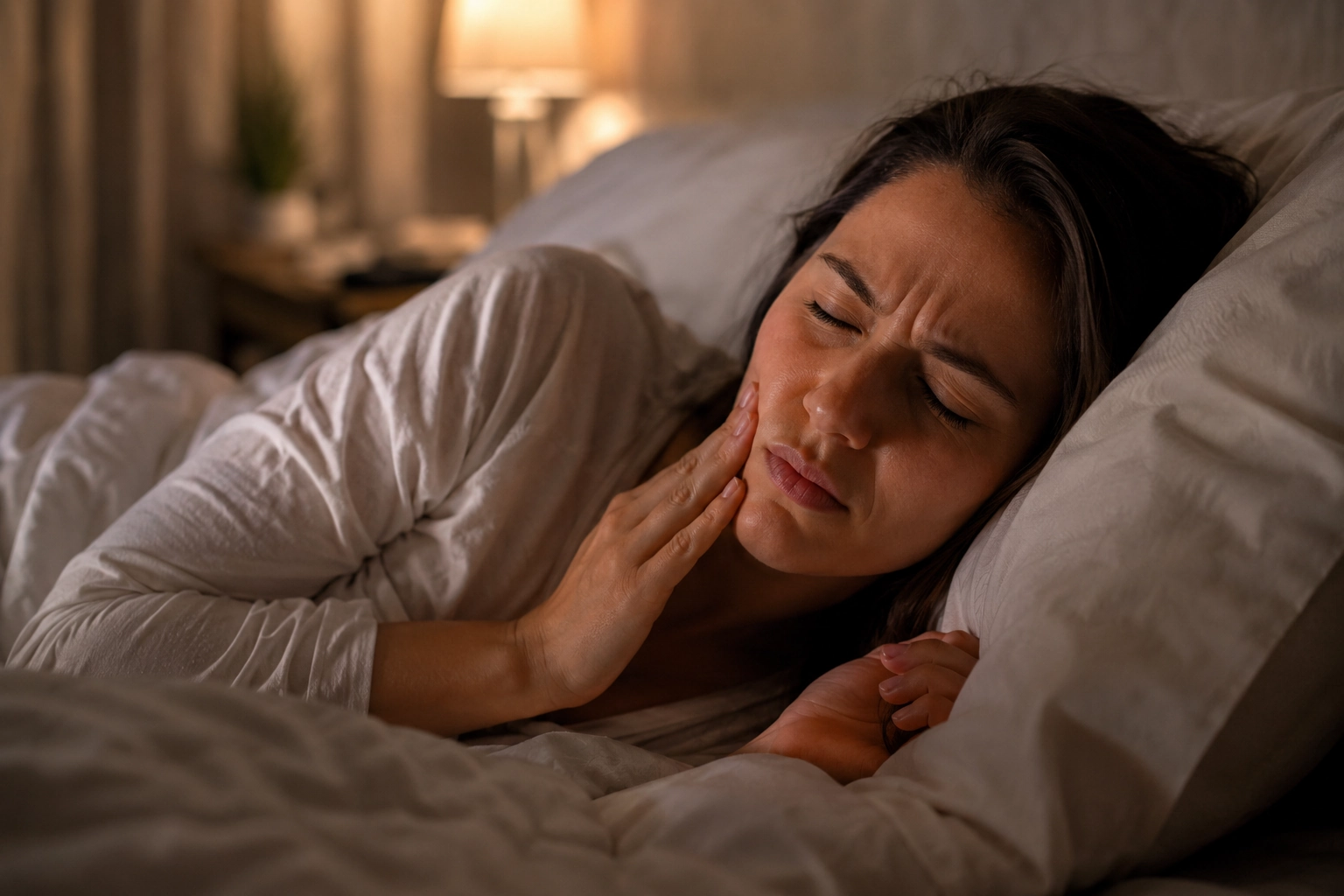
Bruxism is divided into two types: sleep bruxism, which happens unconsciously during the night, and awake bruxism, which occurs during the day, often associated with moments of concentration or tension (while driving, working or using the phone). In both cases, the jaw muscles exert a force far greater than is needed for chewing, which overloads the teeth, the joints and the facial muscles.
The Link Between Stress and Bruxism
The studies are consistent: stress and anxiety are associated with around 70% of bruxism cases. It is no coincidence that peaks in bruxism tend to coincide with periods of greater professional pressure, personal changes or simply poor nights’ sleep. The body processes the accumulated tension and, without the person realising, that tension is released through the jaw.
This also explains why bruxism tends to worsen at certain stages of life and improve at others, without anything changing in oral health itself — the determining factor is often the level of stress.
Signs and Symptoms to Watch For
Bruxism is not always obvious, especially when it occurs during sleep. These are the most common signs:
- Pain or tension in the jaw on waking, which may persist through the morning.
- Frequent headaches, especially in the temples, first thing in the morning.
- Visible wear on the teeth — flatter surfaces, sharper edges or teeth slightly shorter than before.
- Tooth sensitivity to cold or heat, caused by the wearing down of the enamel.
- Clicking or discomfort in the temporomandibular joint (TMJ), in front of the ear.
- Pain in the neck or shoulders, often associated with generalised muscle tension.
- Your partner hears the grinding of your teeth during the night — this is often the first warning sign that reaches us.
If you recognise two or more of these signs, it is worth booking an assessment. The earlier bruxism is identified, the easier it is to protect against its effects.
What Happens If Bruxism Is Left Untreated
The wear caused by bruxism is progressive and, unlike decay, does not hurt until it is already quite advanced. Without follow-up, it can lead to fractures in teeth or existing restorations, gum recession, permanent tooth hypersensitivity and overloading of the temporomandibular joint, which in more serious cases causes chronic facial pain and difficulty opening the mouth fully. In more advanced situations, the accumulated wear can also compromise the aesthetics of the smile, leaving the teeth visibly shorter.
How We Diagnose Bruxism at Porto Smile
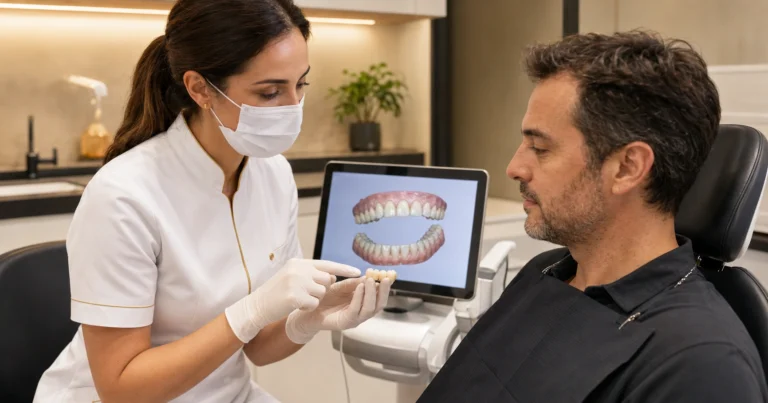
At the assessment appointment, we observe the pattern of tooth wear, the health of the temporomandibular joint and the facial muscles, and we talk with you about your symptoms and daily habits — including your stress levels. This clinical diagnosis makes it possible to understand the severity of the case and design an appropriate treatment plan, without moving to unnecessary solutions.
Treatments Available
There is no definitive “cure” for bruxism — the aim of treatment is to protect the teeth, relieve muscular tension and control the factors that trigger it. At Porto Smile, the plan is always tailored to the severity of each case.
Occlusal Relaxation Splint
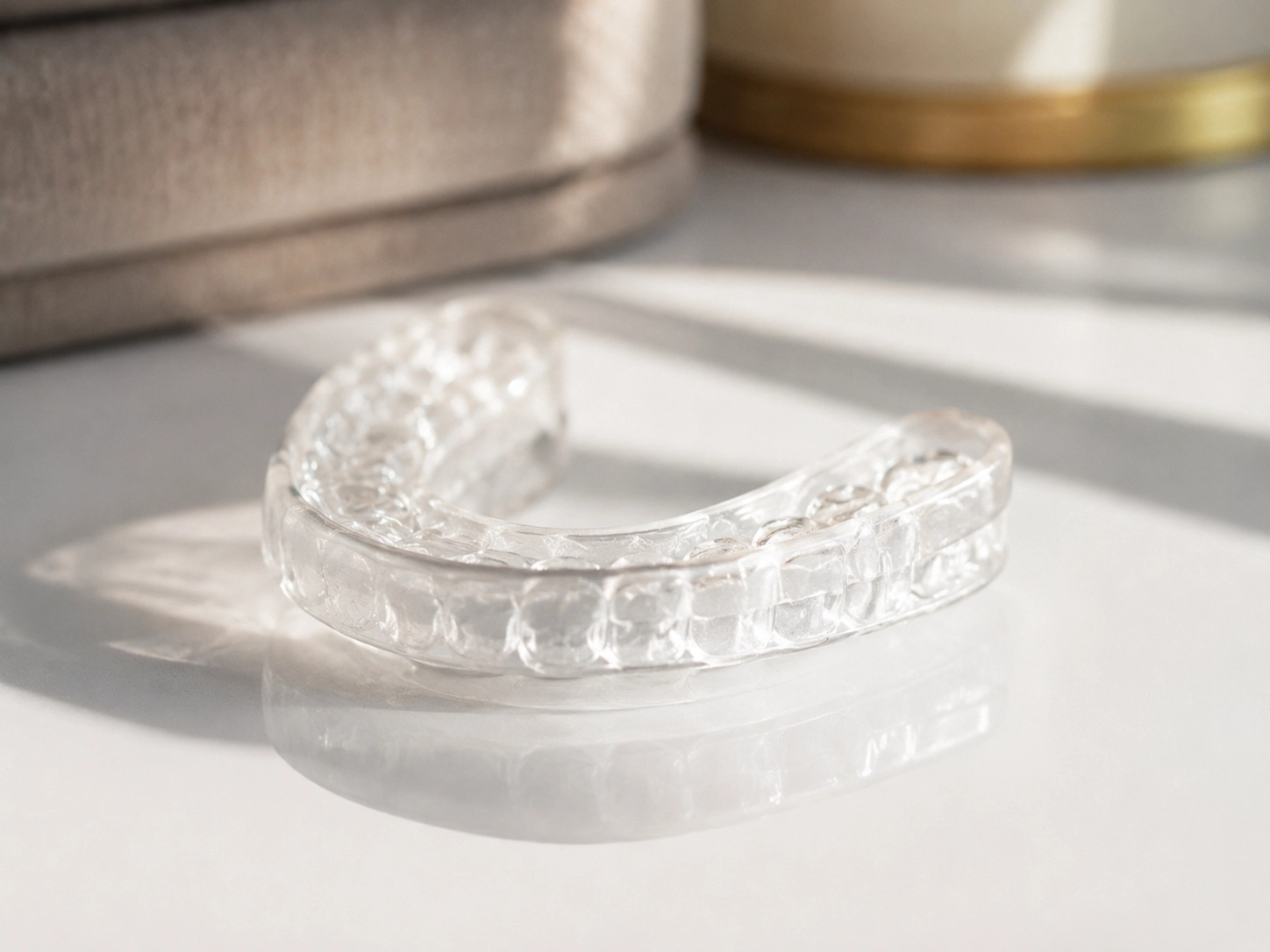
This is the first line of treatment in most cases. The splint is custom-made, prevents direct contact between the upper and lower teeth during the night and reduces muscular overload. It does not eliminate the teeth-grinding habit, but it prevents it from continuing to wear down the teeth and significantly relieves the discomfort on waking.
Dr Elton Dias explains bruxism and the relaxation splint — Porto Smile
Botulinum Toxin
In moderate to severe cases, where the jaw muscles are clearly enlarged and the splint alone is not enough, botulinum toxin can be applied precisely to the masseter muscles. The effect is a partial, temporary relaxation of the clenching force, which reduces pain and night-time friction without affecting normal chewing.
Stress Management
Since stress is one of the main triggers, any strategy that helps reduce it has a direct impact on the frequency and intensity of bruxism — from regular physical exercise to relaxation techniques, meditation or, when needed, psychological support. It does not replace dental treatment, but it complements it very effectively.
In any of these cases, an assessment by a dentist is the first step. Only after understanding the severity of the wear and the origin of the problem does it make sense to choose the right treatment.
Frequently Asked Questions
Can bruxism be cured?
There is no definitive “cure”, but the symptoms can be controlled with a relaxation splint, stress management and, in moderate to severe cases, botulinum toxin. The aim of treatment is to protect the teeth and reduce muscular discomfort, not to eliminate the habit completely.
How long does the splint take to work?
Many patients feel relief from jaw pain and headaches within the first few weeks of use. The protective effect against tooth wear is continuous for as long as the splint is worn during sleep.
How do I know if I have bruxism, if it happens during sleep?
The most common signs are jaw pain on waking, morning headaches and visible wear on the teeth. It is often the partner who notices the grinding of teeth during the night. At an assessment appointment, the dentist can confirm the diagnosis from the pattern of wear.
Does botulinum toxin for bruxism affect chewing?
No, when applied by an experienced professional and in the appropriate doses. The effect is a partial relaxation of the muscles responsible for excessive clenching, without compromising the force needed to chew normally.
Is bruxism in children different from in adults?
Yes. In children, bruxism is often associated with the development of the teeth and tends to disappear on its own with age. Even so, it should be monitored at children’s dentistry appointments to ensure there is no abnormal wear.
Does Porto Smile carry out bruxism assessments in Matosinhos?
Yes. The assessment includes an examination of the jaw, the temporomandibular joint and the tooth wear, as well as a conversation about your symptoms and daily habits. Call 229 388 709 to book an appointment at Rua Germano da Paiva 10, Matosinhos.
Have questions about this topic? Our team is here to help.
Book a Consultation