
There’s a moment many patients describe the same way: no longer laughing freely in photographs, instinctively covering their mouth when they speak, avoiding apples, steak or toast because the denture slips, or simply because there aren’t enough teeth left to chew with confidence. It isn’t just an aesthetic issue — it’s how we eat, how we speak, how we feel at a table full of friends or in a job interview. Losing most or all of your teeth changes daily life in a profound way, and for many people, a traditional removable denture never quite restores that lost confidence.
All-on-4 was created to solve exactly this problem, for good. With just four implants, it’s possible to recover a full, fixed dental arch — no taking it out at night, no adhesives, no constant fear that something will come loose mid-meal or mid-conversation. Even more striking: patients leave the surgery itself with fixed teeth already in place — there’s no “toothless” period, and no removable temporary denture getting in the way of the transition.
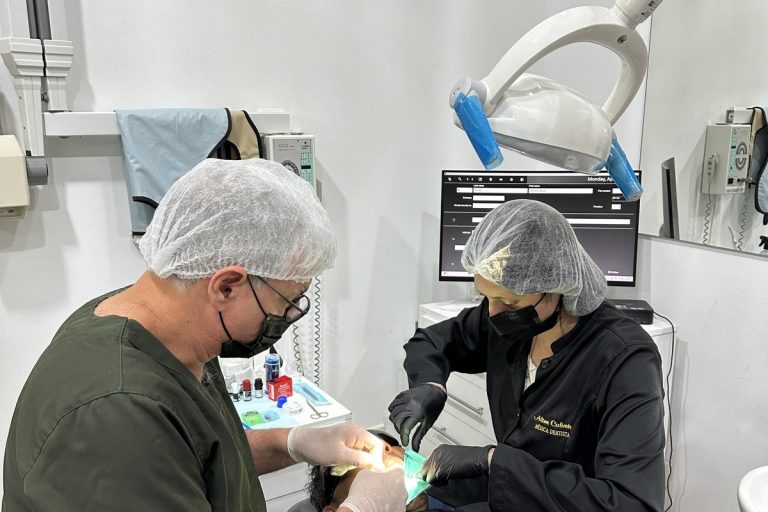
The All-on-4 protocol, explained by Dr Elton Dias — Porto Smile
This is one of the treatments patients ask us about most at Porto Smile — often people tired of unstable dentures, or who put off treating badly compromised teeth for years, afraid of the process or believing the only alternative would be an obviously “fake-looking” smile. It isn’t. This article explains how All-on-4 works, who’s a candidate, and what to expect, step by step, from the first consultation to the final smile.
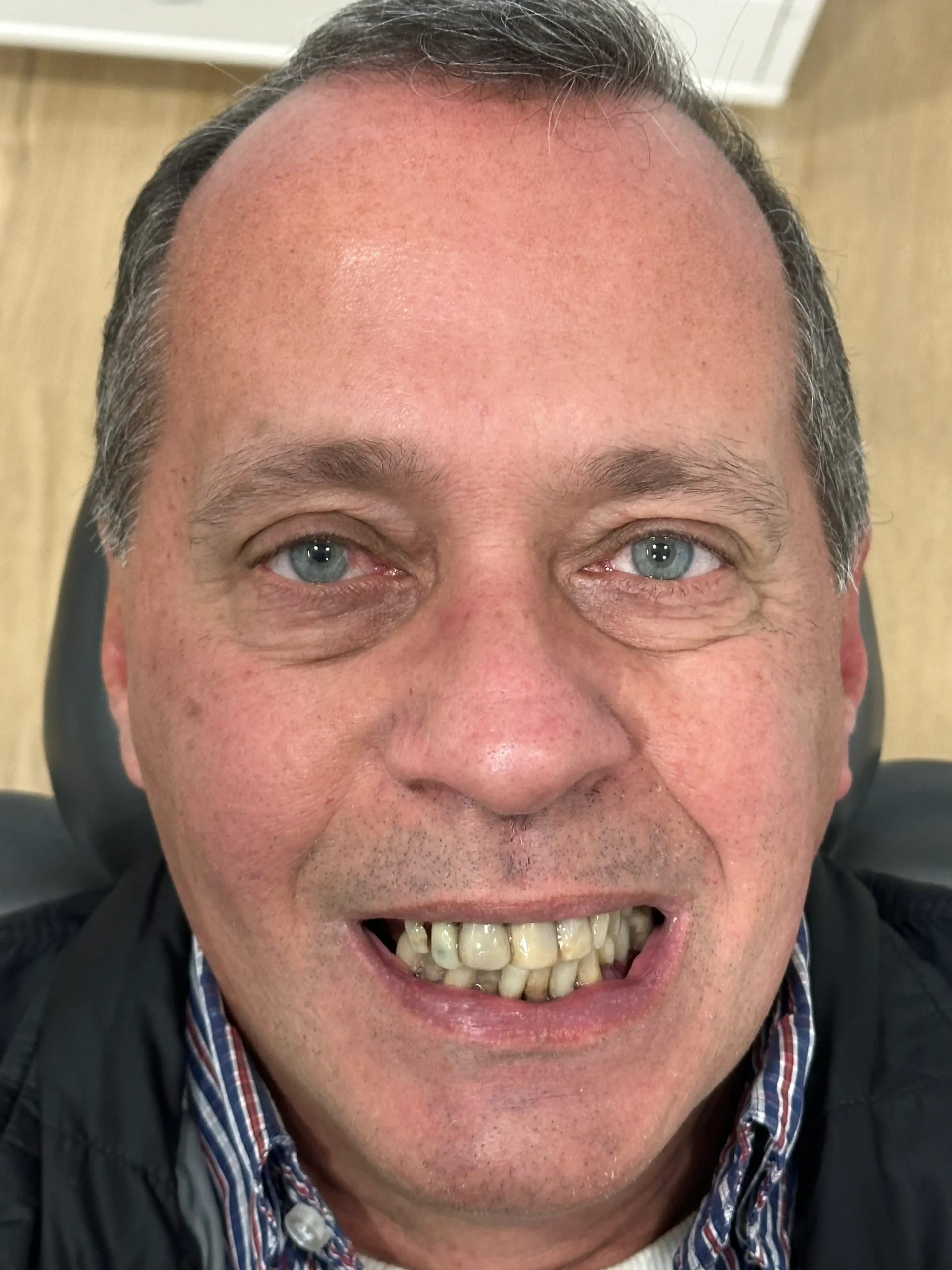
Before
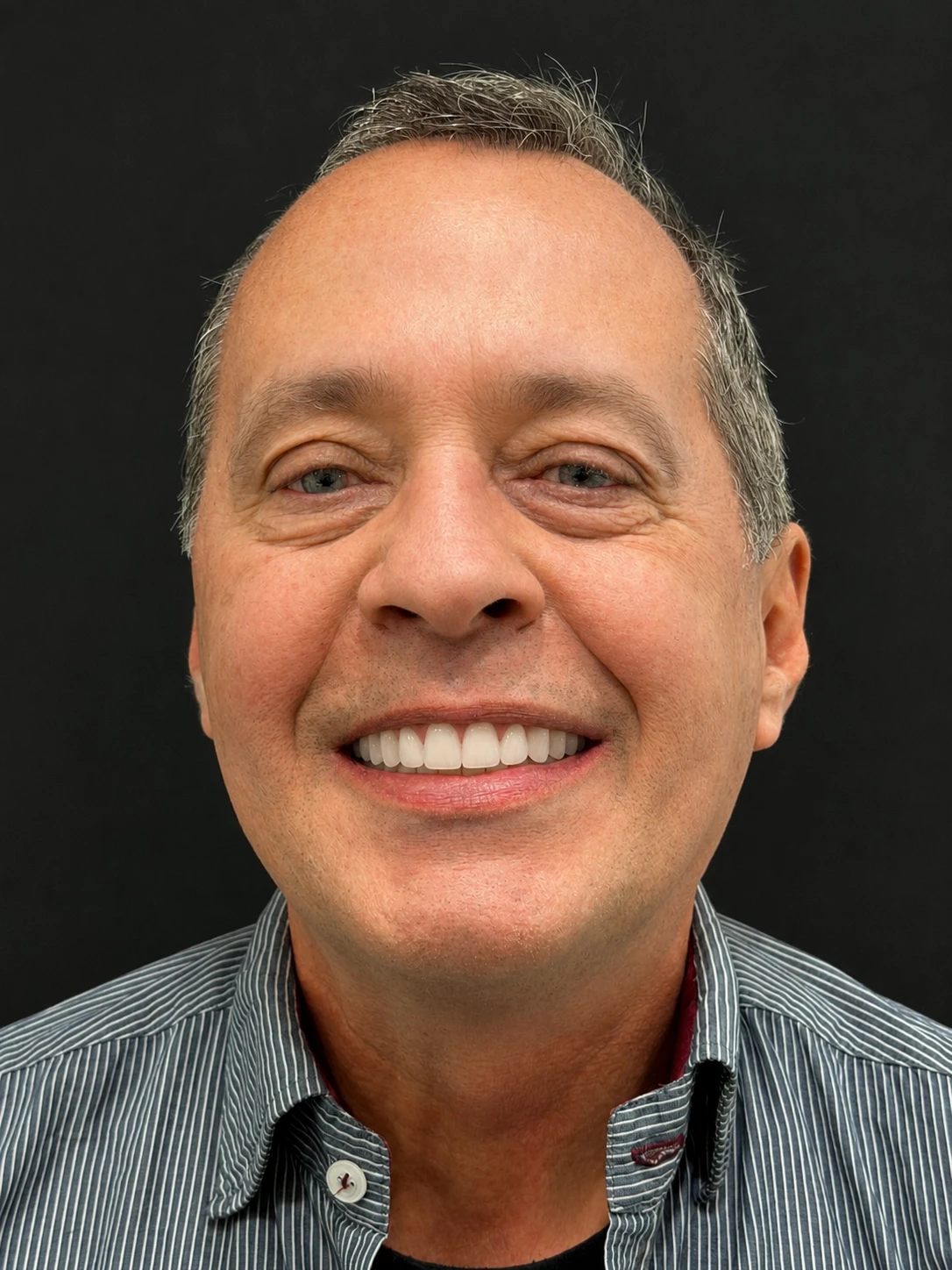
After
A real All-on-4 case, treated at Porto Smile.
Why All-on-4 makes such a difference in patients’ lives
Getting a fixed arch back isn’t just about getting teeth back — it’s about getting freedom back. It’s being able to accept a dinner invitation without a second thought about the menu. It’s laughing freely in a family photo. It’s talking on the phone, in a meeting or a doctor’s appointment, without worrying the denture might shift. Patients who make this transition often describe it as the moment they “felt like themselves again” — not because teeth define who we are, but because the day-to-day insecurity around them tends to weigh more than people usually admit.
It’s also, very often, a matter of overall health: chewing poorly or avoiding certain foods out of discomfort has a direct impact on nutrition, and the chronic discomfort of a loose denture is a constant source of stress that most people never associate with their mouth. Resolving this for good has an effect that goes far beyond the smile.
What All-on-4 actually is
All-on-4 is an oral rehabilitation protocol that replaces a full dental arch (upper, lower, or both) supported on just four dental implants, instead of the six to eight implants traditionally used in other techniques. The two front implants are placed vertically, and the two back implants are angled — allowing better use of the available bone and, in most cases, avoiding the need for a prior bone graft, one of the technique’s biggest advantages over other full-rehabilitation solutions.
A complete denture is then fixed onto these four implants, designed to function and look like natural teeth. The key difference from a traditional removable denture is that this one doesn’t come out of the mouth — it’s fixed to the implants and is only removed by the dentist, during an appointment.
Who’s a candidate for All-on-4
All-on-4 is mainly indicated for people who have already lost all or most of the teeth in one arch, or who have teeth with a poor prognosis (advanced mobility, severe periodontal disease, extensive decay) that will need to be extracted. It’s also a common option for people who already wear a full removable denture and experience discomfort, instability when speaking or chewing, or progressive loss of retention over the years.
A clinical evaluation with a 3D CT scan is what confirms whether a case is suitable — it shows exactly how much bone is available and its quality, and allows the ideal position of the four implants to be planned before surgery.
How the process works, step by step
Evaluation appointment and digital planning. We start with a full clinical exam and a 3D CT scan, which lets us visualise the jawbone in detail and simulate implant positioning before any intervention. This is the stage where every question gets answered and where we confirm whether All-on-4 is indeed the most suitable solution.
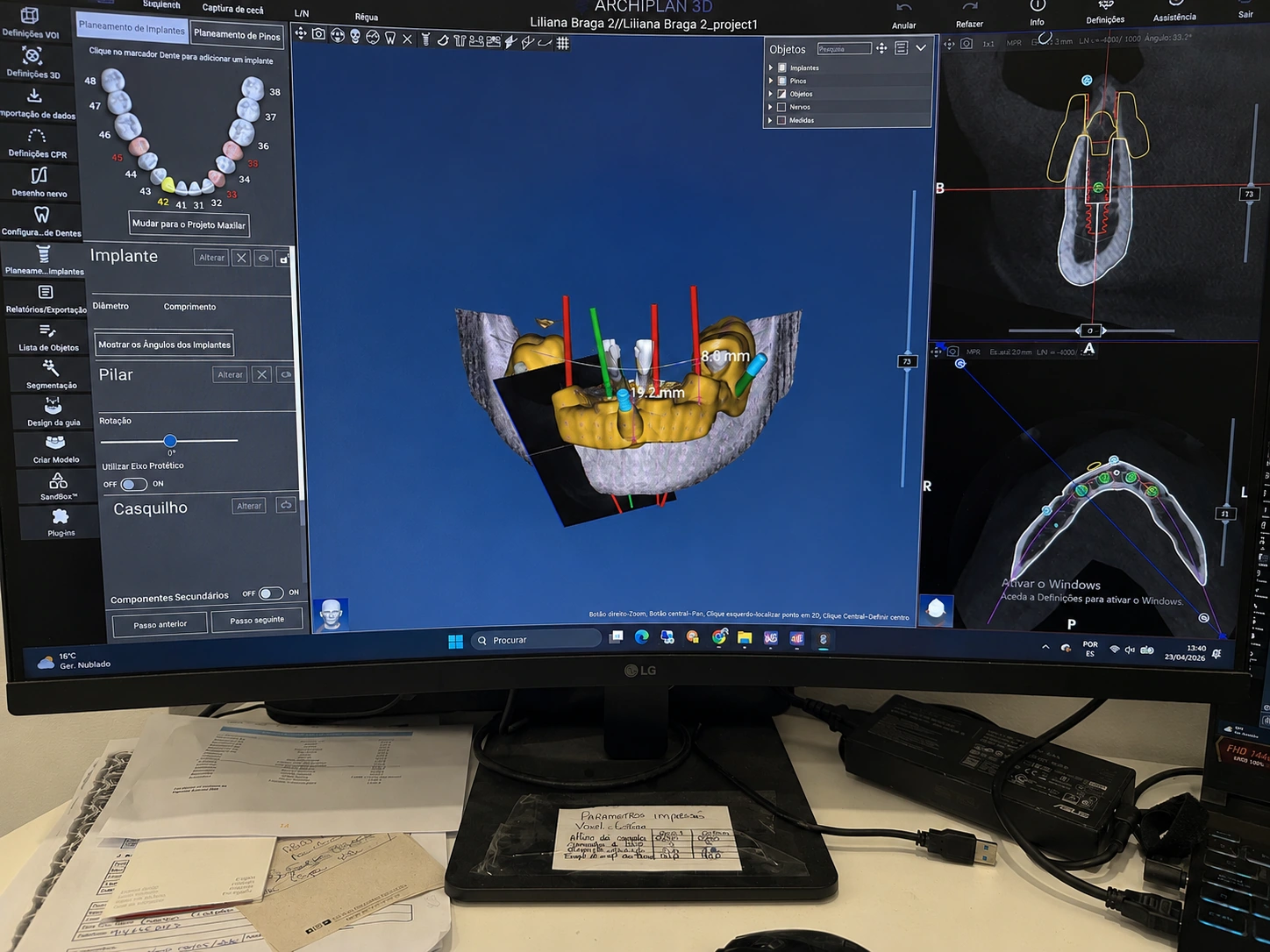
3D digital planning — an exact simulation of implant positioning before surgery.
Surgery with placement of the four implants and a fixed provisional denture on the same day. The surgery is performed under local anaesthesia, using guided surgery — the same digital 3D planning used for conventional implants — to place the four implants with precision. At the end of that same session, a fixed provisional denture is attached, so the patient leaves the clinic without being toothless and without wearing a removable denture during the healing phase.
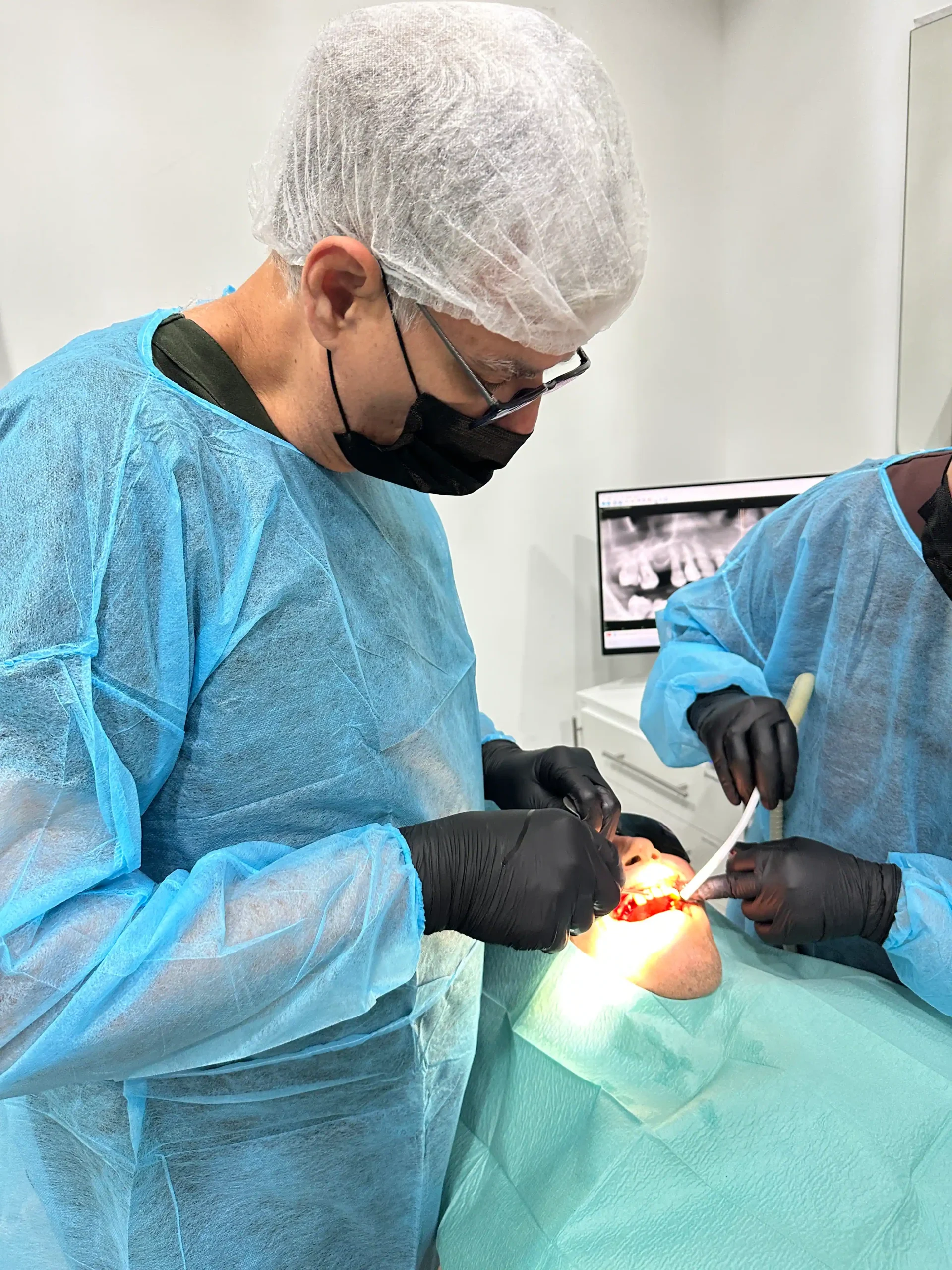
Guided surgery — the four implants are placed with millimetre precision, following the digital plan.
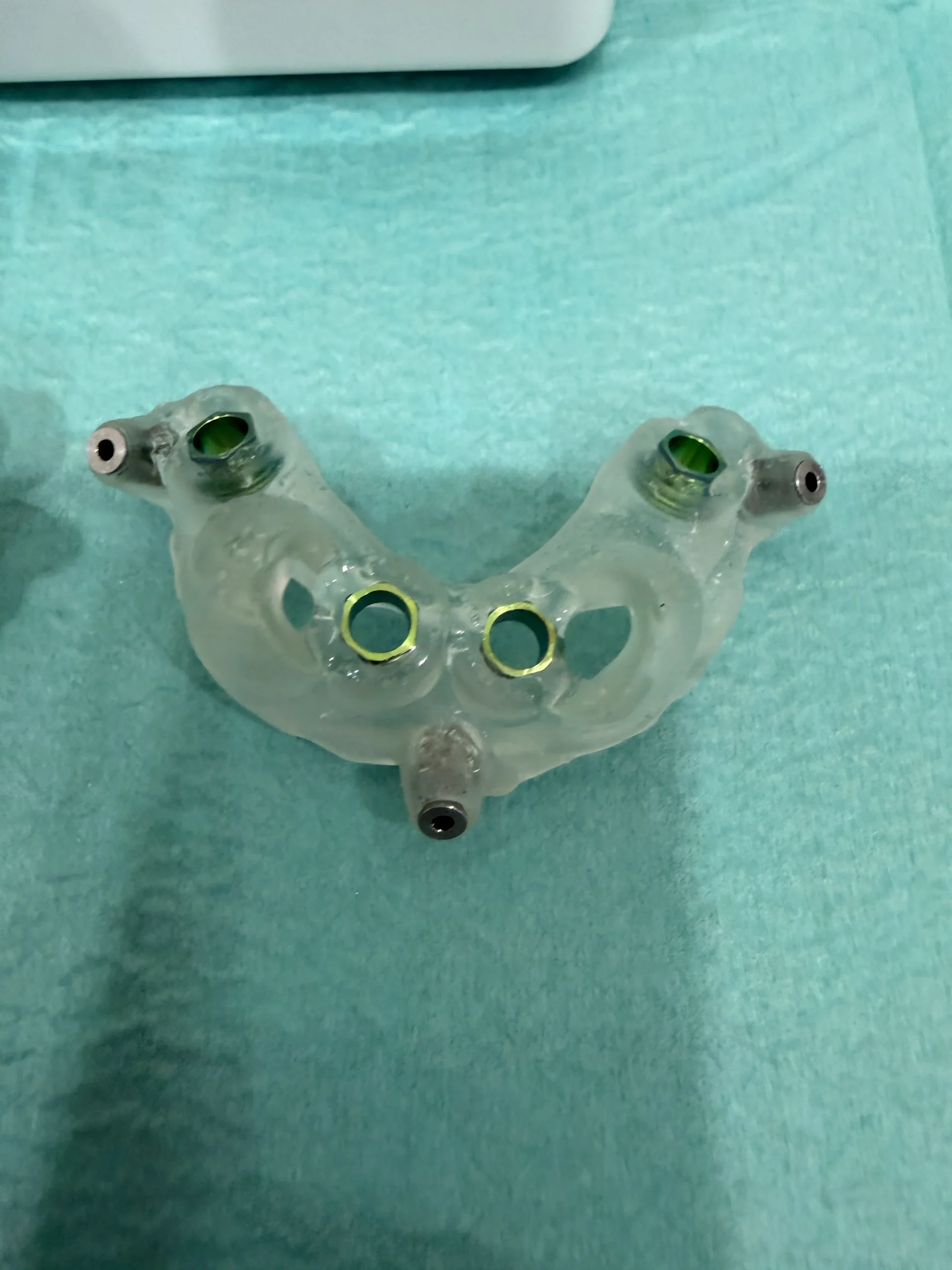
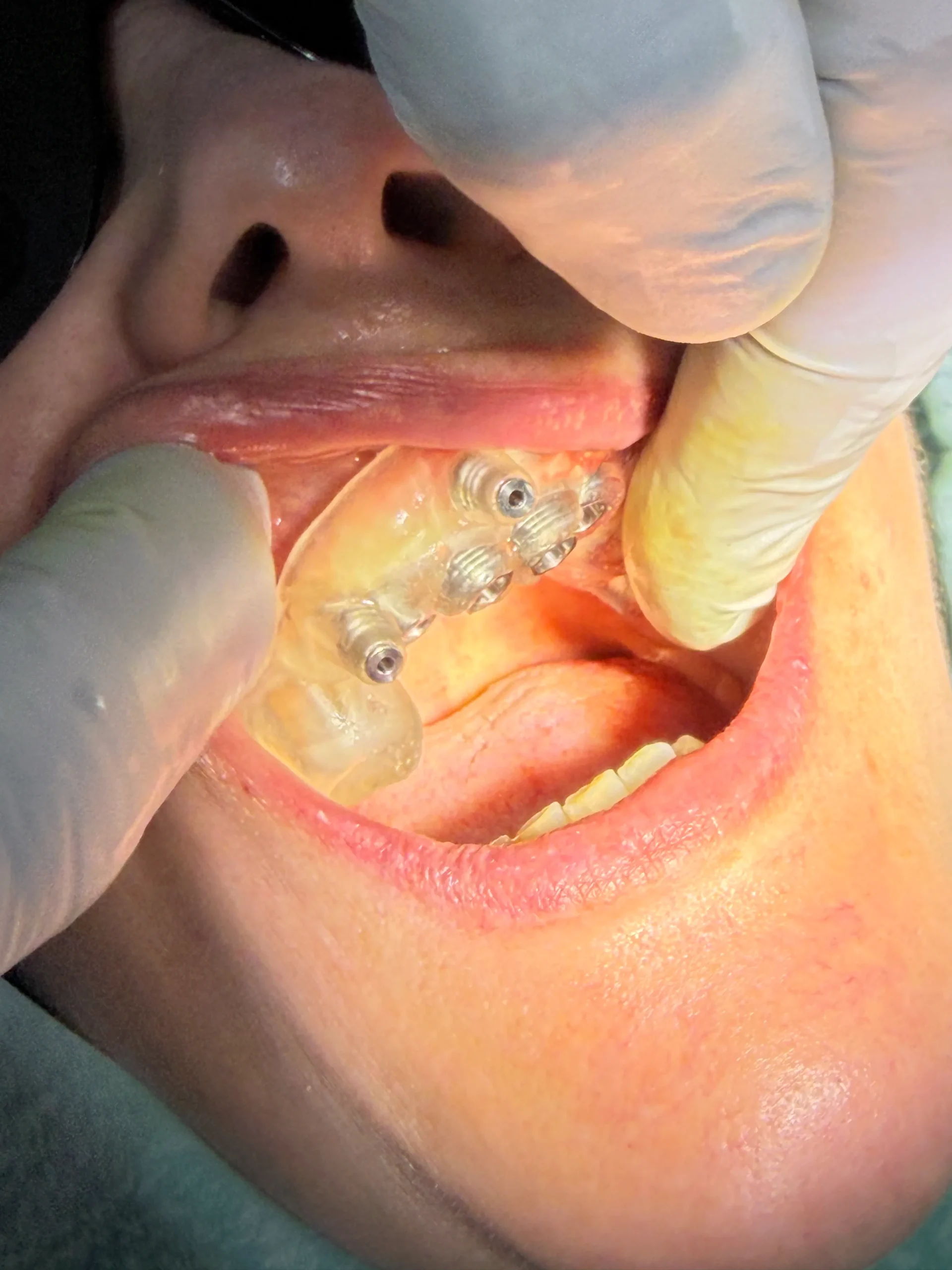
A custom surgical guide, built from the 3D plan — ensures every implant ends up exactly where it was planned.
From provisional to final denture. The denture fitted on the day of surgery is provisional — lighter, designed for the osseointegration period. Once the implants have integrated with the bone (a process that takes, on average, a few months), the final denture is made, in a more resistant material with a finished aesthetic. This is the stage where aesthetic and bite details are fine-tuned so the result feels as natural and comfortable as possible.
Recovery: what to expect in the first days and weeks
In the first few days after surgery, some swelling and localised discomfort is normal, managed with the medication prescribed at the appointment. We recommend a soft-food diet for the first few weeks, so as not to overload the implants while bone integration is underway, gradually reintroducing firmer foods as healing progresses.
Oral hygiene deserves extra attention during this phase — the fixed denture needs careful cleaning underneath and around the structure, with specific instructions given at the follow-up appointment. Most patients return to their normal routine (work, usual diet) within a few days, with the necessary adjustments while osseointegration is still ongoing.
What most patients report, even at this early stage, is almost immediate relief — even with the provisional denture, they stop feeling that constant instability of a removable denture. It’s the first sign the decision was worth it, weeks before even reaching the final denture.
All-on-4 vs. a removable denture: the day-to-day difference
The most common comparison we hear is with a full removable denture, especially from patients who already wear one and are looking for a more stable alternative. A removable denture can come loose while speaking or chewing, often requires adhesive, and doesn’t prevent the progressive bone loss that naturally happens when there are no teeth or implants stimulating the jawbone. All-on-4, being fixed to the implants, eliminates that movement, allows more confident chewing, and helps preserve bone in the long run, because the implants provide the bone stimulation the jaw needs.
How much does All-on-4 cost at Porto Smile
The cost varies depending on the number of arches being rehabilitated (upper, lower, or both), the material chosen for the final denture, and any additional procedures identified during the evaluation. Because this is a full rehabilitation treatment, the quote is always tailored to each case, after the evaluation appointment with a 3D CT scan — we don’t provide estimates without that exam, to avoid giving a figure that later doesn’t match the clinical reality. Contact us to book an evaluation and receive a personalised, no-obligation quote.
Why choose Porto Smile for All-on-4
At Porto Smile, All-on-4 follows the same standard of rigour we apply to all implantology treatments: Nobel Biocare and Sweden & Martina implants, among the most studied and reliable brands on the market; guided surgery with 3D digital planning, for greater precision and predictability; and the PRF (Platelet-Rich Fibrin) protocol, which speeds up healing and reduces post-operative discomfort. Dr Elton Dias personally oversees every oral rehabilitation case, with more than 20 years of clinical experience and over 5,000 implantology cases completed.
Giving back more than teeth — giving back confidence
No two All-on-4 rehabilitations are the same, because no two stories are the same. Some patients arrive at their first appointment after years of avoiding smiling in photos; some gave up eating certain foods so long ago they barely remember the taste; some simply want to stop waking up at night to a denture bothering them. What they all have in common is the moment, weeks after surgery, when they look in the mirror and recognise their own smile again — this time, fixed, stable, and built to last.
If you recognise yourself in any of this, the first step is simple: a no-obligation evaluation appointment, where we discuss your case, take the 3D CT scan, and explain exactly what to expect. No rushed decisions — just clarity, so you can decide with confidence.
Frequently Asked Questions
Does All-on-4 hurt?
The surgery is performed under local anaesthesia, so you won’t feel pain during the procedure. Some discomfort and swelling in the first few days is normal, managed with the medication prescribed at your appointment. The PRF protocol used at Porto Smile helps reduce this discomfort further.
Do I leave the clinic without teeth after surgery?
No. One of the main advantages of All-on-4 is that a fixed provisional denture is fitted during the same surgical session. You leave the appointment with fixed teeth, even before the implants are fully integrated into the bone.
Do I need a bone graft to get All-on-4?
In most cases, no. The angulation of the two back implants makes better use of existing bone, which avoids the need for a prior graft in many situations. Still, the 3D CT scan at your evaluation appointment is what confirms whether your case can skip that procedure.
How long does it take to get the final denture?
You leave surgery with a fixed provisional denture. The final denture is fitted once the implants are fully integrated into the bone, a process that takes, on average, a few months, and is always monitored through follow-up appointments.
What’s the difference between All-on-4 and a full removable denture?
All-on-4 is fixed to the implants and doesn’t come out of the mouth — it won’t shift while speaking or chewing, and it helps preserve the jawbone. A full removable denture can be unstable, often needs adhesive, and doesn’t prevent the progressive bone loss typical of patients with no teeth or implants.
Does Porto Smile offer All-on-4 in Matosinhos?
Yes. The evaluation includes a clinical exam and a 3D CT scan to confirm whether your case is suitable for this technique, followed by a personalised treatment plan. Call +351 229 388 709 to book an appointment at Rua Germano da Paiva 10, Matosinhos, Portugal.
Have questions about this topic? Our team is here to help.
Book a Consultation