
It’s seven in the evening, a weekend, or you’re away from home, and suddenly a tooth starts to hurt. Before you panic, there are safe steps you can take at home to ease the discomfort and protect the tooth until you can see a dentist.
This article explains the most common causes of toothache, what you can safely do while you wait for your appointment, popular myths to avoid, and when the pain stops being something to “wait and see” about and becomes a real emergency.
Why a tooth hurts so much
Toothache rarely appears without a reason. The most common causes are:
- Deep cavity — when decay reaches the innermost layer of the tooth, close to the nerve, the pain is usually throbbing and gets worse with cold, heat or sweet foods.
- Fracture or crack — a cracked tooth, even one that isn’t visible to the naked eye, can cause sharp pain when biting.
- Pulp inflammation (pulpitis) — the tooth’s nerve becomes inflamed, often as a result of untreated decay or an old trauma.
- Dental abscess — an infection at the tooth root or in the gum, causing intense pain, sometimes with swelling.
- Inflamed gum or an emerging wisdom tooth — pressure from an erupting tooth or an infected gum can also cause localised pain.
- Sensitivity after a recent treatment — some discomfort in the days following a filling or scaling is normal, but it shouldn’t be intense or persistent.
Only a clinical exam, sometimes with an X-ray, can identify the exact cause. Until then, the goal is to manage the discomfort without making things worse.
Popular home remedies in Portugal — myth or fact?
If you live in or are visiting Portugal, you may hear about several traditional “grandmother’s remedies” for toothache. Some are simply ineffective; others can actually make things worse. Worth clearing up:
- Clove on the sore spot. The only one of these remedies with some real scientific basis: clove contains eugenol, a substance with genuine anaesthetic and anti-inflammatory effects, which can reduce pain for 2 to 3 hours. Even so, it’s only temporary symptom relief — it doesn’t treat the cavity, infection or underlying cause. Use it sparingly, and avoid it in young children, pregnant women or anyone on blood thinners without medical advice first.
- Rinsing with brandy or other spirits (“aguardente”). A very common Portuguese home remedy, but not recommended: alcohol dries out and irritates the tissues in your mouth, can worsen inflammation if there’s already a wound or exposed gum, and only gives a false sense of relief.
- Aspirin or alcohol applied directly to the tooth or gum. This is the most dangerous myth: direct contact can chemically burn the gum tissue. Painkillers should always be taken orally, never applied directly.
- Crushed garlic pressed against the tooth or gum. Garlic has antimicrobial properties, but applied directly for a prolonged time it can burn the gum, just like aspirin.
- Raw potato or sweet potato tea against the cheek. A folk tradition with no scientific evidence of effectiveness — harmless, but won’t meaningfully treat or relieve the pain.
- A bag of hot salt or a warm cloth on the face. Heat tends to increase inflammation and can help spread an infection if one is present — it’s the opposite of what you should do.
What you can safely do at home
- Rinse with warm salt water. A teaspoon of salt dissolved in a glass of warm water helps reduce inflammation and clean the area. Repeat several times a day.
- Apply a cold compress to the outside of your face. A cloth with ice, held over the sore area for 15 to 20 minutes, helps reduce swelling and slightly numbs the pain.
- Take a painkiller you’re already used to, following the dosage on the label. An anti-inflammatory or common painkiller can ease the pain until your appointment.
- Carefully remove any food trapped between your teeth with dental floss, without forcing it against the gum.
- Avoid chewing on the sore side and choose soft, lukewarm foods — never very hot or very cold.
- Sleep with your head slightly elevated. Lying completely flat increases blood pressure in the head, which tends to make toothache worse at night.
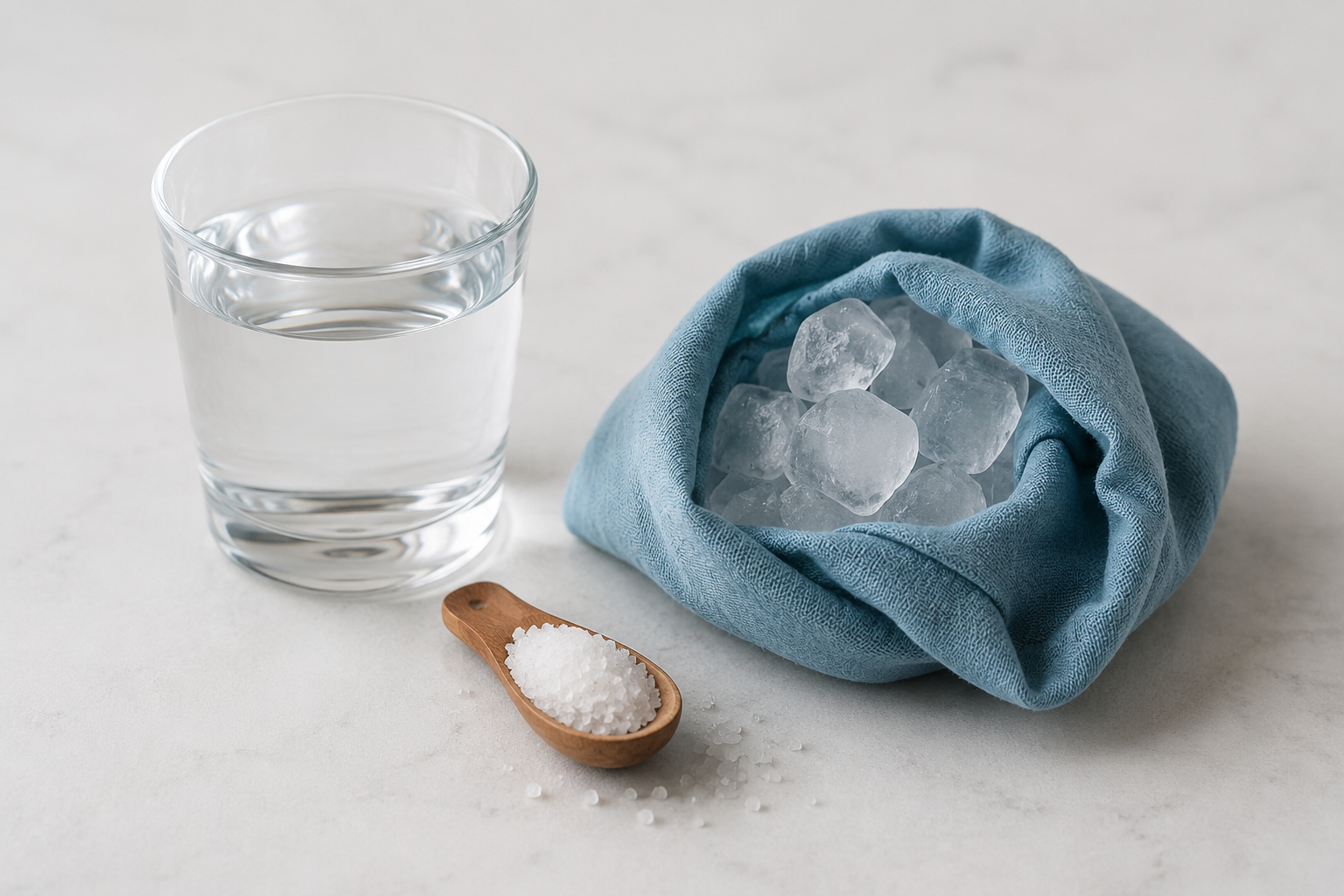
Warm salt water and a cold compress — the two most effective first-aid steps until your appointment.
These measures ease the symptom but don’t treat the cause — they’re meant to make the wait more bearable, not to postpone treatment.
There are also two signs to always watch for: don’t ignore swelling in the face, even if the pain seems under control, as it can be a sign of infection developing beneath the surface; and don’t skip the appointment just because the pain suddenly went away — a toothache that disappears on its own, without any treatment, can mean the tooth’s nerve has died, while the infection keeps progressing without the warning sign of pain.
Dr Elton Dias explains what to do before reaching the dentist — Porto Smile (video in Portuguese)
When it’s a dental emergency
Seek urgent dental care, without waiting for a routine appointment, if you have:
- Visible swelling in the face, gum or neck.
- Fever associated with the toothache.
- Difficulty swallowing, opening your mouth fully, or breathing.
- A tooth that’s broken, displaced or knocked out following an impact.
- Very intense pain that doesn’t ease with painkillers.
- Bleeding that doesn’t stop after a dental injury.
In these situations, the risk of infection spreading to other areas of the face or body is real, and response time matters. Contact the clinic or go to an emergency dental service as soon as possible.
How we treat toothache at Porto Smile
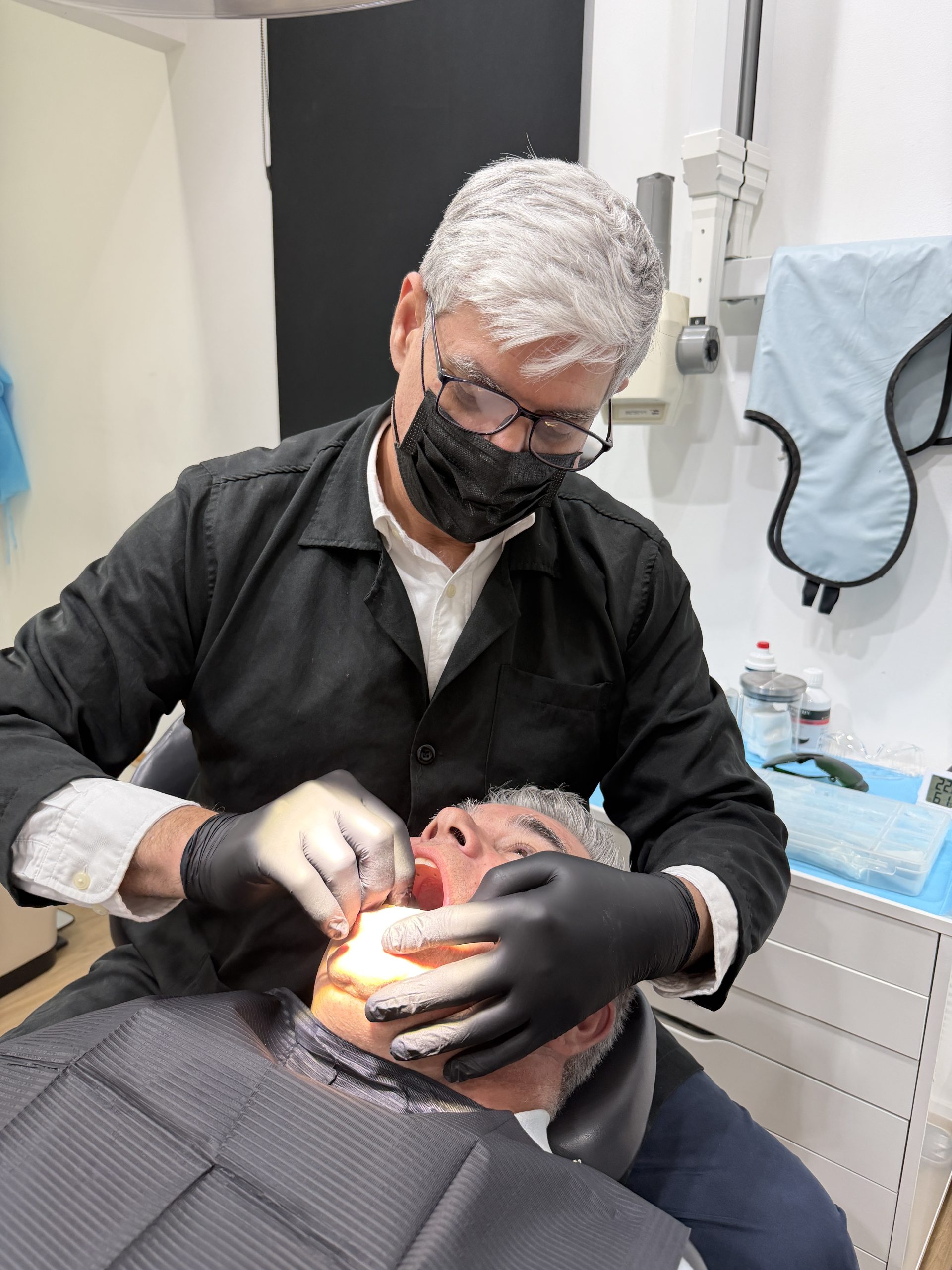
Identifying the exact cause of the pain before deciding on the right treatment.
At your appointment, we start by identifying the exact cause of the pain — through a clinical exam and, when needed, an X-ray — before deciding on treatment. Depending on the diagnosis, the plan may involve a simple filling, a root canal treatment (endodontics) to remove the affected nerve and preserve the tooth, or draining an abscess, combined with antibiotics when there’s active infection.
Our priority is always to relieve the pain quickly first, and only then plan the definitive treatment calmly. If you’re in pain, you don’t need to wait for your next routine appointment — contact us and we’ll be glad to find you a slot as soon as possible.
Frequently Asked Questions
Can I put aspirin directly on my tooth to relieve the pain?
No. This is a common myth, but direct contact between aspirin and the gum can chemically burn the tissue and make things worse. Take the painkiller orally, following the label, and never apply it directly to the tooth or gum.
Does clove really cure a toothache?
It eases it, but doesn’t cure it. Clove contains eugenol, with a genuine anaesthetic effect that can reduce pain for 2 to 3 hours, but it doesn’t treat the cavity or infection behind the pain. Use it sparingly and avoid it in young children, pregnant women, or people on blood thinners.
Can I rinse with brandy to relieve a toothache?
It’s not recommended. It’s a very common home remedy in Portugal, but alcohol dries out and irritates the mouth’s tissues and can worsen the situation if there’s a wound or exposed gum, with no real effect on the cause of the pain.
Does warm salt water actually help?
Yes. Rinsing with warm salt water has an anti-inflammatory effect and helps clean the area, slightly easing the discomfort. It doesn’t replace treatment, but it’s safe and can be repeated several times a day until your appointment.
The toothache went away on its own — do I still need to see a dentist?
Yes, you do. Pain that suddenly disappears without treatment can mean the tooth’s nerve has stopped responding, which doesn’t eliminate the infection — only the symptom that was warning you about it. It’s important to get checked even without pain.
When is a toothache a dental emergency?
Whenever there’s swelling in the face or neck, fever, difficulty swallowing or breathing, a broken or displaced tooth, or very intense pain that doesn’t ease with painkillers. In these cases, seek dental care as soon as possible.
Can I take antibiotics on my own for a toothache?
It’s not advisable. Antibiotics should only be prescribed by a dentist after assessing the cause of the pain, and they aren’t effective or appropriate for every type of dental pain. Self-medicating can mask symptoms that are important for diagnosis.
Does Porto Smile handle dental emergencies?
Yes. If you’re in pain, contact us on +351 229 388 709 or +351 968 114 956 and we’ll do our best to find you an appointment as soon as possible, at Rua Germano da Paiva 10, Matosinhos, Portugal.
Have questions about this topic? Our team is here to help.
Book a Consultation