
Few dental treatments have as unfair a reputation as root canal treatment. Just mention the word “canal” in a conversation and someone will pull a face and tell a horror story — almost always heard from someone else, not lived firsthand. The truth is that modern dentistry has transformed this procedure, and most of what people say about it no longer reflects reality.
This article separates myths from facts about root canal treatment (endodontics), so you can approach the appointment with information instead of fear.
What root canal treatment actually is
Inside every tooth there is a chamber with living tissue — the dental pulp — containing nerves and blood vessels. When this tissue is affected by deep decay, a fracture or an injury, it can become inflamed or infected, and loses the ability to heal on its own.
Root canal treatment, or endodontics, involves removing this damaged pulp, cleaning and disinfecting the inside of the tooth, and sealing the space to prevent the infection from returning. The goal is simple: eliminate the pain and the infection while keeping the natural tooth in the mouth, instead of extracting it.
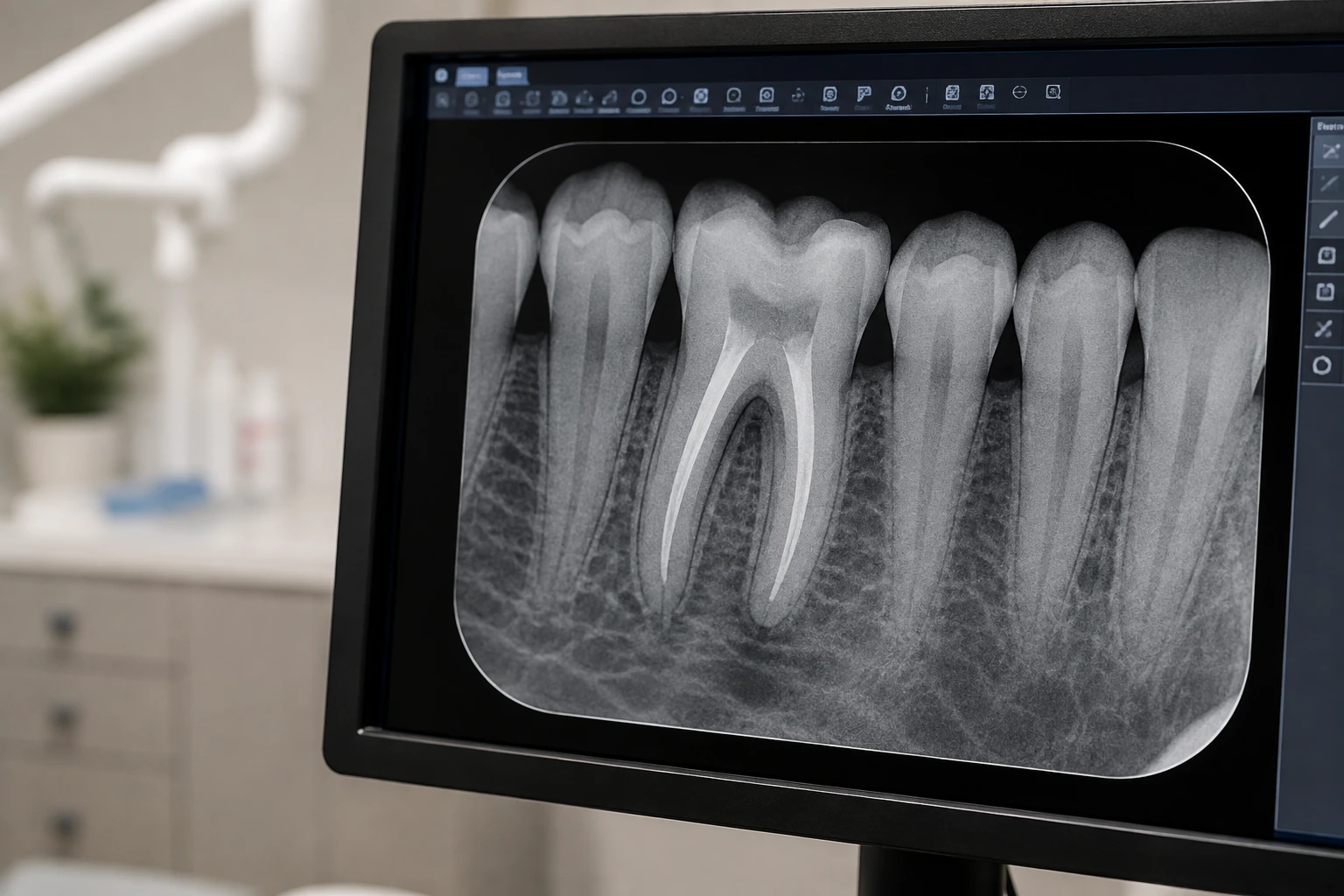
X-ray of a tooth root — this is where root canal treatment takes place.
Myths and facts about root canal treatment
Myth: root canal treatment is extremely painful. This is probably the most persistent myth, and also the most outdated. During the procedure, the tooth and the surrounding gum are anaesthetised, just as with a filling — you shouldn’t feel pain, only some pressure. In most cases, the pain people associate with a “root canal” is actually the pain of the infection they already had before coming to the appointment. The treatment doesn’t cause that pain: it relieves it.
Myth: a tooth treated with a root canal always turns dark. Darkening only happens in rare cases, usually linked to an old untreated injury or incomplete cleaning of the inside of the tooth. Done correctly, with proper cleaning and sealing, root canal treatment doesn’t change the colour of the tooth.
Myth: after a root canal, the tooth always needs a crown. It depends on how much tooth structure remains. If the tooth keeps most of its original structure, it can be restored with a simple resin filling, in the same session. A crown is only recommended when the structural loss is significant and the tooth becomes more fragile under chewing forces.
Myth: root canal treatment can cause diseases elsewhere in the body. This idea dates back to an early 20th-century theory (the “focal infection theory”), long abandoned by the scientific community for lack of evidence. Current studies find no link between root canal-treated teeth and systemic disease. On the contrary: leaving a dental infection untreated is what represents a real risk to overall health.
Myth: it’s better to extract the tooth than to have a root canal. Whenever it’s possible to save the natural tooth, that’s the best option. A natural tooth, even treated, chews and distributes bite force more effectively than any artificial substitute, and avoids all the steps (and costs) associated with placing an implant or a prosthesis later on.
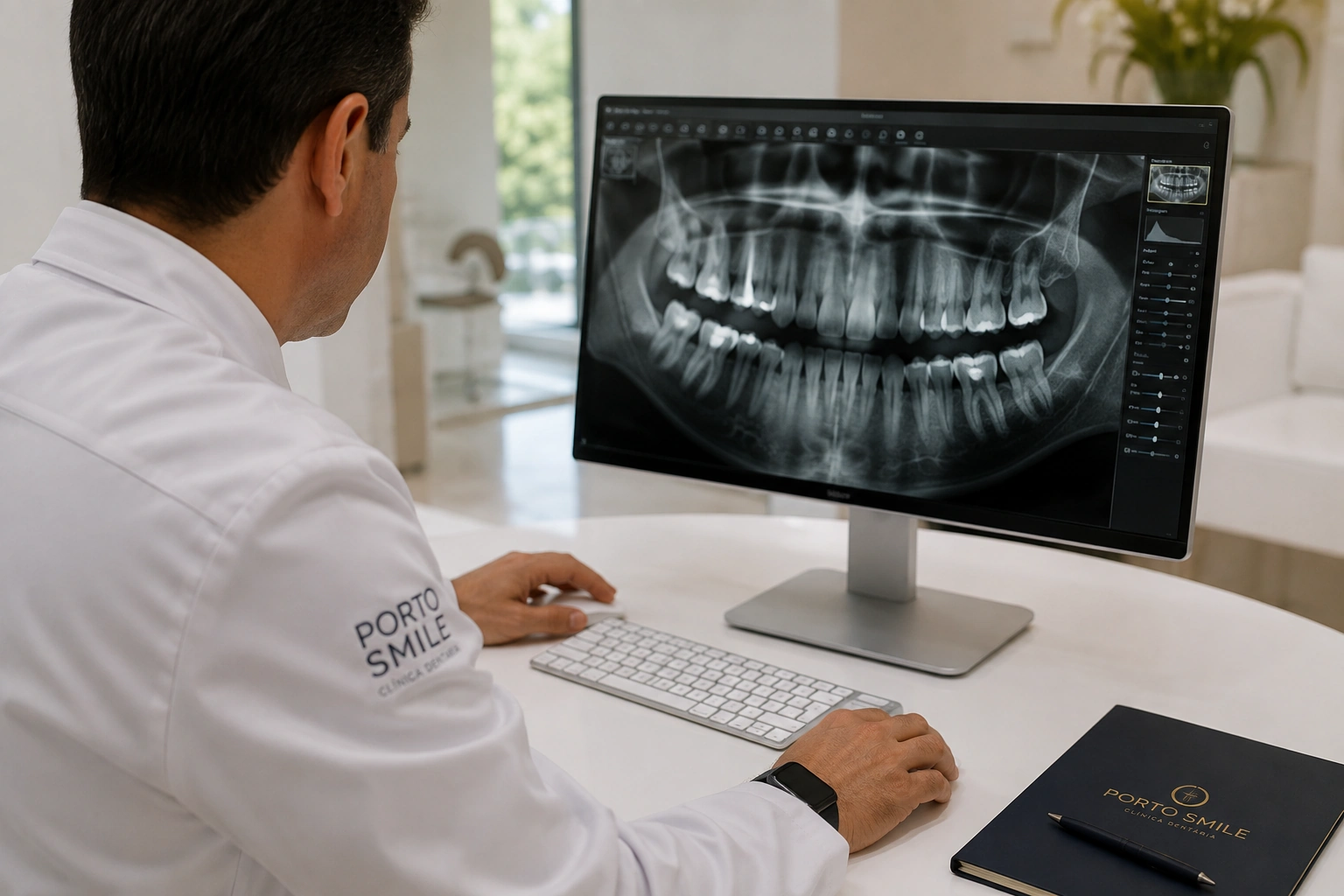
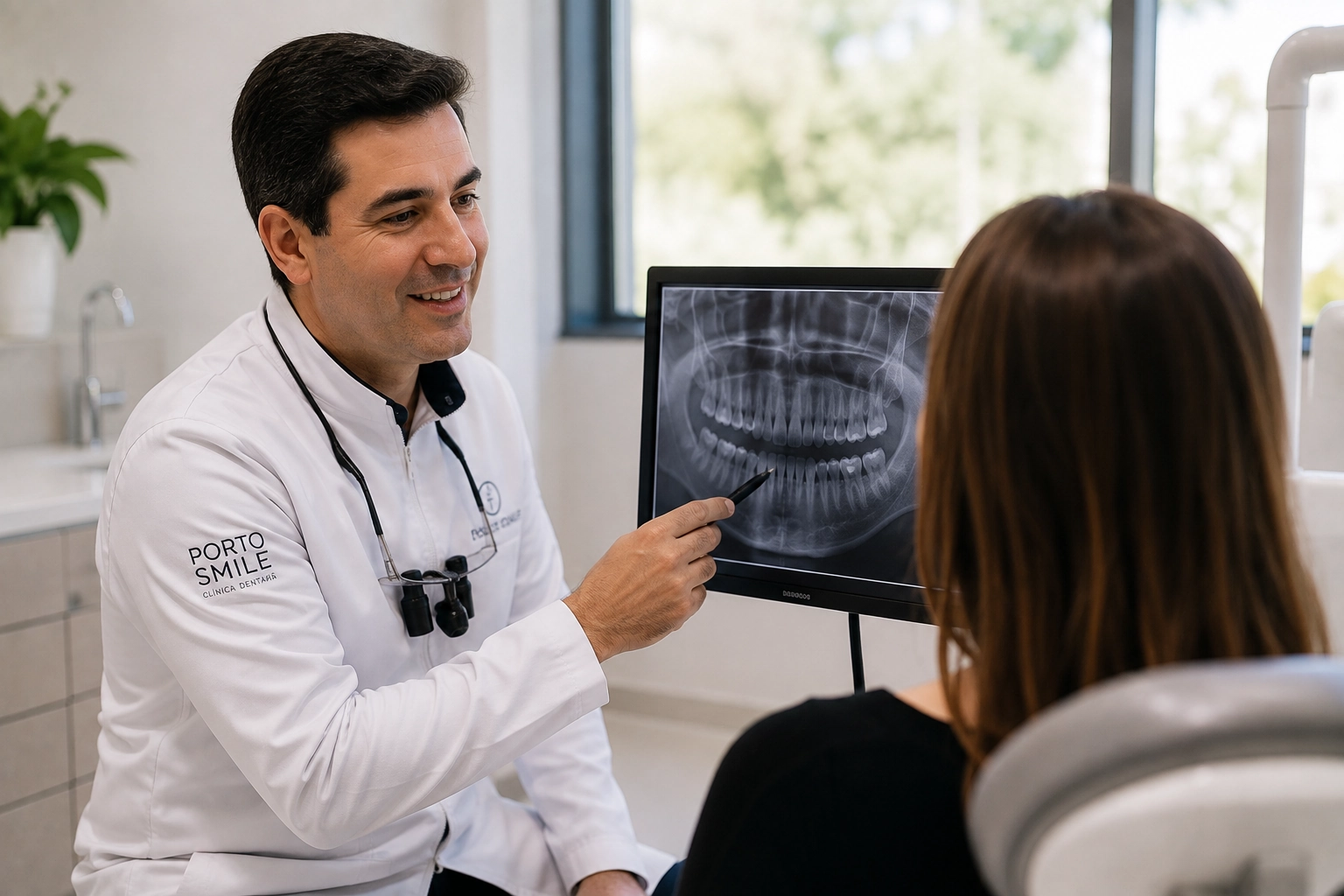
Every case is carefully reviewed before any treatment decision.
Fact: root canal treatment has a very high success rate. Done correctly and with proper follow-up, a treated tooth can last as many years as a healthy tooth — decades, in many cases.
Fact: the earlier it’s treated, the simpler and more predictable the procedure is. Putting off the appointment out of fear of a “root canal” tends to make things worse: the infection progresses, the pain increases, and the treatment needed can become more complex.
How we carry out root canal treatment at Porto Smile
The appointment begins with a careful assessment, using X-rays, to confirm the diagnosis and plan the treatment. Before any instrument touches the tooth, we apply local anaesthesia, ensuring the whole procedure takes place without pain.
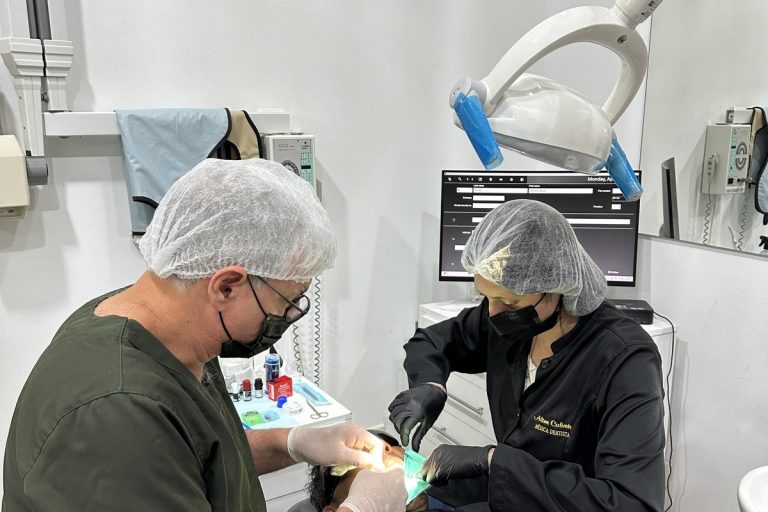
Next, we isolate the tooth with a specific barrier, to keep the area clean and dry throughout the treatment, and proceed to remove the damaged pulp with precision instruments. The inside of the tooth is carefully cleaned, disinfected and shaped, and only then sealed with a biocompatible material that prevents bacteria from re-entering.
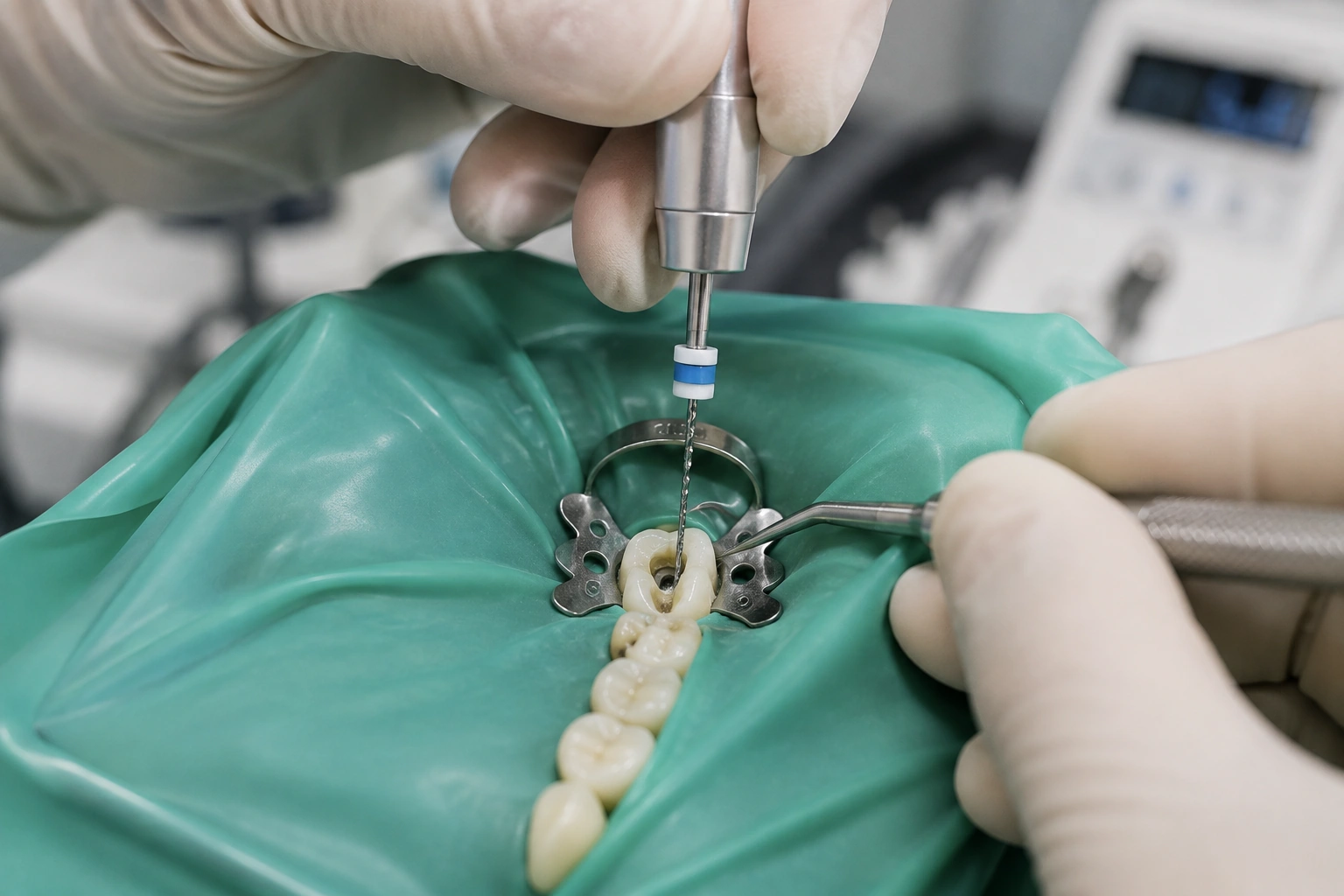
Tooth isolated with a specific barrier during root canal treatment.
Depending on the complexity of the case, treatment can be completed in a single session or require a second appointment. At the end, we assess together whether the tooth can be restored with a simple filling or needs a crown for greater long-term protection.
Signs you may need root canal treatment
Some symptoms deserve an assessment:
- Spontaneous, throbbing pain that worsens at night or when lying down
- Prolonged sensitivity to cold or heat, that persists after the stimulus is removed
- Pain when biting or touching the tooth
- Swelling in the gum near the tooth, sometimes with a small “bubble”
- Darkening of the tooth after an injury
There isn’t always pain — sometimes the nerve has already died and the symptom has disappeared, but the infection continues to progress silently. That’s why routine check-ups remain important, even without obvious symptoms.
Why it’s worth losing the fear
Fear of root canal treatment is, in most cases, fear of an old story — of a kind of dentistry that no longer exists. With effective anaesthesia, modern instruments and faster, more precise techniques, today’s experience has little to do with the reputation the procedure still carries.
If you have a tooth with symptoms or have already been recommended a root canal treatment, the best way to lose the fear is to understand exactly what to expect from the appointment — and we’re happy to explain every step before we begin.
Frequently Asked Questions
Does root canal treatment hurt?
No. The tooth and the surrounding gum are anaesthetised before any instrument touches the tooth, just as with a normal filling. The pain many people associate with a “root canal” is actually the pain of the infection they already had before the appointment — the treatment relieves that pain, it doesn’t cause it.
How many sessions are needed?
It depends on the complexity of the case. Many root canal treatments are completed in a single session; more complex cases, with more extensive infection or more difficult anatomy, may require a second appointment.
Does the tooth become weaker after root canal treatment?
It can become more fragile if it has lost a lot of structure through decay or fracture, and in those cases a crown is recommended to protect it. If most of the tooth remains, a simple filling is enough and the tooth keeps its normal function.
Is it true that root canal treatment can cause other diseases?
No. That idea is based on an old theory, with no current scientific evidence to support it. On the contrary, treating a dental infection prevents it from spreading and affecting overall health.
How long does a root canal-treated tooth last?
Done correctly and well restored, a root canal-treated tooth can last as many years as a healthy tooth — in many cases, decades, with usual oral hygiene care and routine check-ups.
Does Porto Smile provide root canal treatment in Matosinhos?
Yes. We provide full assessment, diagnosis and root canal treatment, with local anaesthesia and follow-up through to the final restoration of the tooth. Call +351 229 388 709 to book an appointment at Rua Germano da Paiva 10, Matosinhos.
Have questions about this topic? Our team is here to help.
Book a Consultation