

Almost everyone has been there: you brush or floss and there’s a bit of blood, and the most common reaction is to shrug it off and carry on with the day. Maybe you brushed harder than usual, maybe it’s “just sensitivity”. But healthy gums don’t bleed — and when it happens regularly, your body is trying to tell you something. Ignoring that signal is often the first step towards a problem that starts small and, over time, can cost you your teeth.
This article explains what bleeding gums actually mean, the difference between gingivitis and periodontitis, and what to do before the problem progresses.
What bleeding gums actually mean
Gum bleeding is rarely an isolated event — in the vast majority of cases, it’s a sign of inflammation. That inflammation starts when plaque, a sticky film that builds up on teeth and along the gumline, isn’t effectively removed by brushing and flossing. The bacteria in plaque release toxins that irritate the gum tissue, making it redder, swollen and more sensitive to the touch — and it’s exactly this inflamed tissue that bleeds more easily, even with gentle brushing.
This first stage has a name: gingivitis, and it’s the good news in this story — because, unlike the stages that follow, gingivitis is fully reversible with careful oral hygiene and, usually, a professional cleaning.
Gingivitis vs. periodontitis: what’s the difference
The difference between these two stages comes down mostly to time and consequences.
In gingivitis, the inflammation stays limited to the gum. There’s no destruction yet of the bone or tissues that support the tooth, which means that, treated in time, everything goes back to normal, with no lasting effects.
If gingivitis is left untreated, the inflammation can advance to deeper structures — the bone and ligaments that hold the tooth in place. This is where periodontitis begins, a chronic disease that is no longer fully reversible: lost bone doesn’t grow back on its own. Over time, “pockets” form between the tooth and the gum, where bacteria accumulate even more easily, in a cycle that, left untreated, tends to worsen and can lead to the loss of teeth that would otherwise be perfectly healthy.
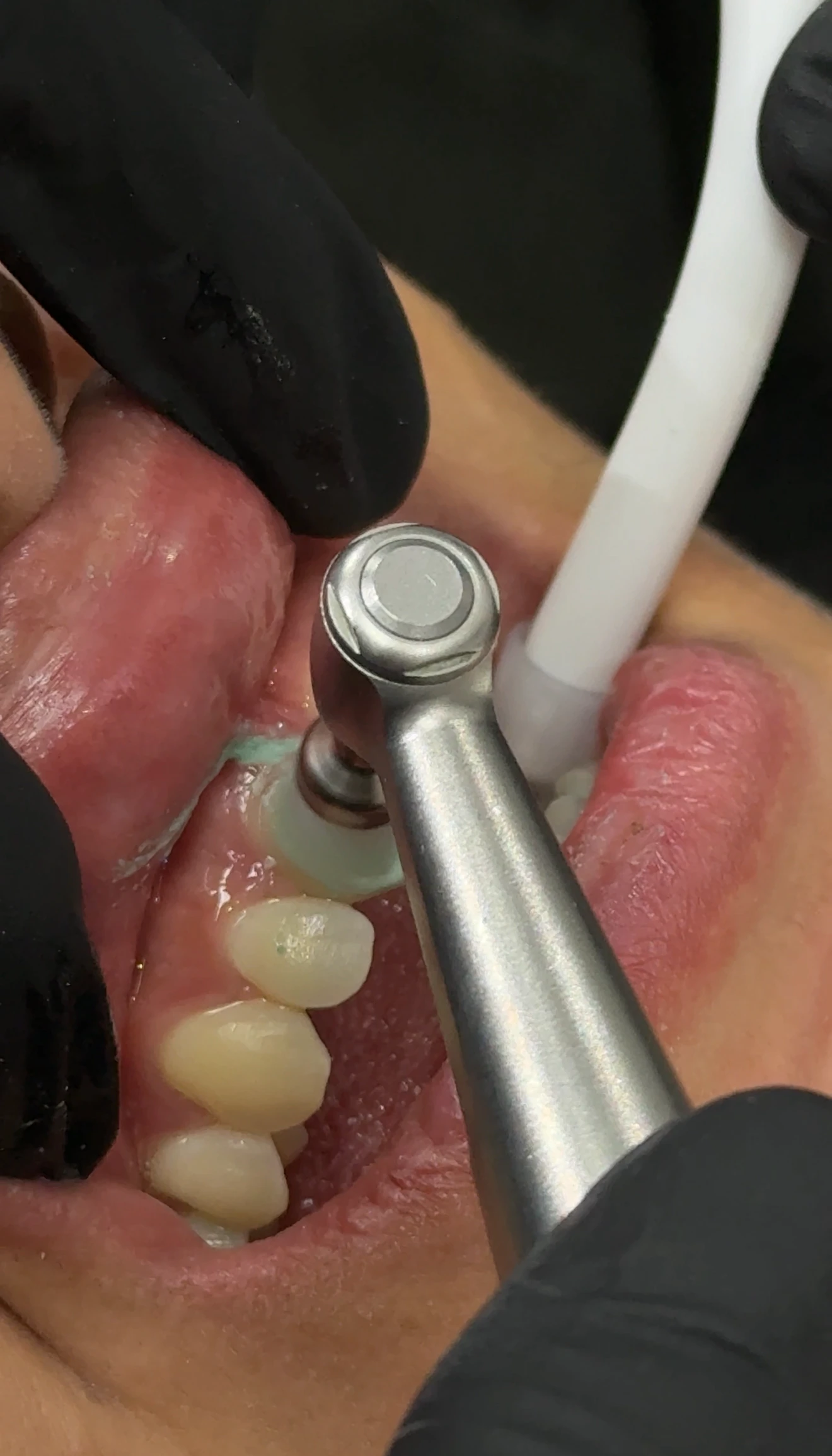
Periodontal assessment — the first step to understanding the source of the bleeding.
Common causes of bleeding gums
The most common cause, without question, is plaque build-up from insufficient oral hygiene. But there are other factors that raise the risk or worsen the picture:
- Tartar: when plaque isn’t removed, it hardens into tartar, which no longer comes off with brushing alone — it needs professional scaling.
- Smoking: smokers have a significantly higher risk of gum disease, and tissue healing is slower.
- Hormonal changes: pregnancy, puberty or menopause can leave gums more sensitive and prone to bleeding.
- Poorly controlled diabetes: makes healing harder and increases gum inflammation — the relationship between the two conditions is, in fact, bidirectional.
- Medication: some blood thinners and certain blood pressure medications list gum bleeding as a known side effect.
- Genetic predisposition: some people are more prone to developing gum disease even with good hygiene, which reinforces the importance of routine check-ups.
Warning signs to watch for
Besides the bleeding itself, there are other signs that often accompany gum disease and deserve attention:
- Red, swollen or tender gums
- Persistent bad breath, even after brushing
- A feeling that teeth look “longer” (gum recession)
- Loose teeth or new gaps appearing between teeth
- Pus between the tooth and the gum
- A change in how your teeth fit together when biting
If you recognise two or more of these signs, it’s best not to wait for your next routine appointment — it’s worth scheduling a specific assessment.
How we diagnose and treat it at Porto Smile
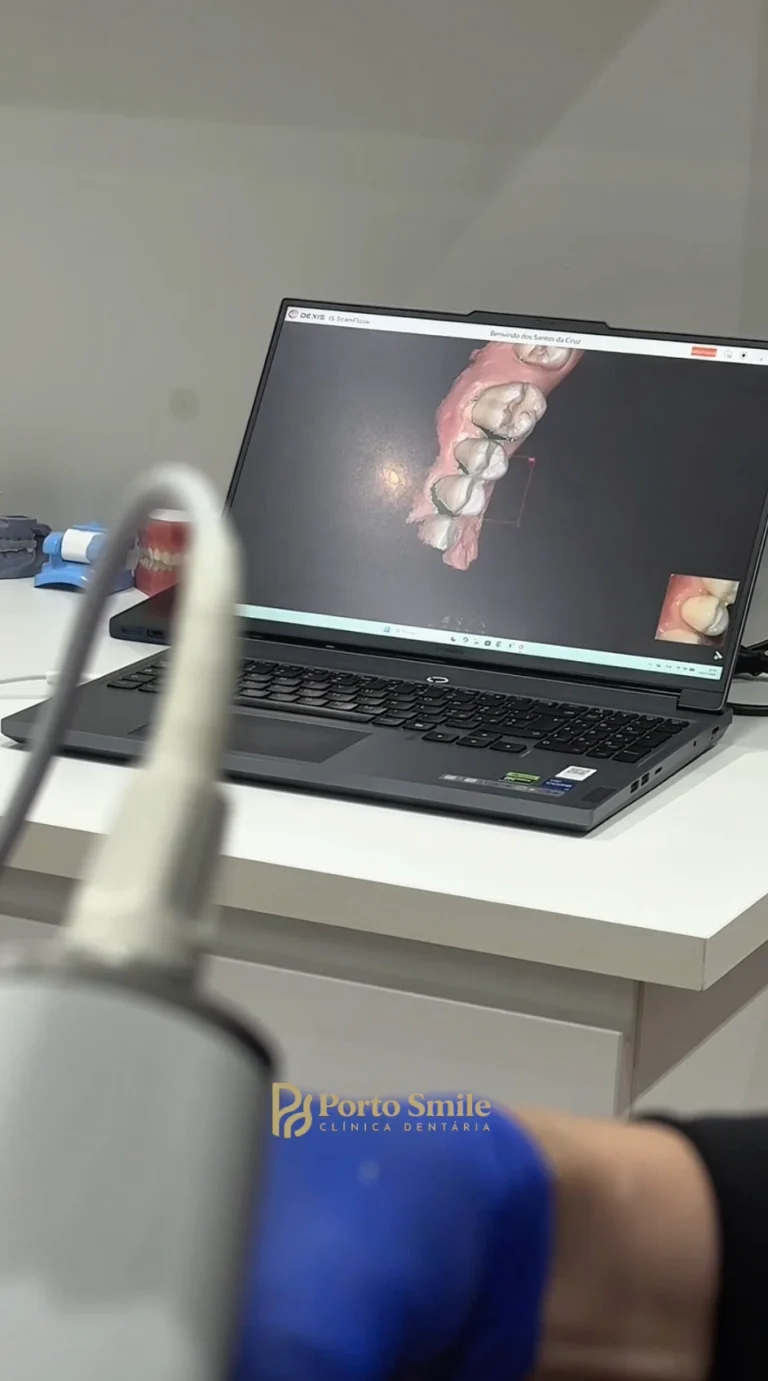
The assessment always starts with a full periodontal exam: we measure the depth of the pockets between tooth and gum, check for bleeding, tartar and tooth mobility, and, when needed, complement it with X-rays to see whether bone loss has already occurred.
In cases of gingivitis, treatment is usually resolved with a professional scaling (removing tartar above and slightly below the gumline) and reinforcing a proper at-home hygiene routine. In periodontitis, treatment goes deeper: we use root planing, which cleans and smooths the root surface below the gum, reducing inflammation and helping the tissue reattach to the tooth. In more advanced cases, surgical follow-up may be needed to reduce periodontal pockets or regenerate lost bone.
At Porto Smile, scaling is done with a state-of-the-art system that combines high-power ultrasound with heated water — which significantly reduces sensitivity during the procedure — and a specific working mode for periodontal treatment, adjusted to remove tartar in deeper pockets without harming gum tissue that’s already inflamed. The same equipment also allows the cleaning to be complemented with air polishing, which gently removes stains and biofilm, and has a safe mode for maintenance around dental implants, without any risk of damaging the implant surface — which also makes it useful for following up patients with implants or rehabilitations like All-on-4.
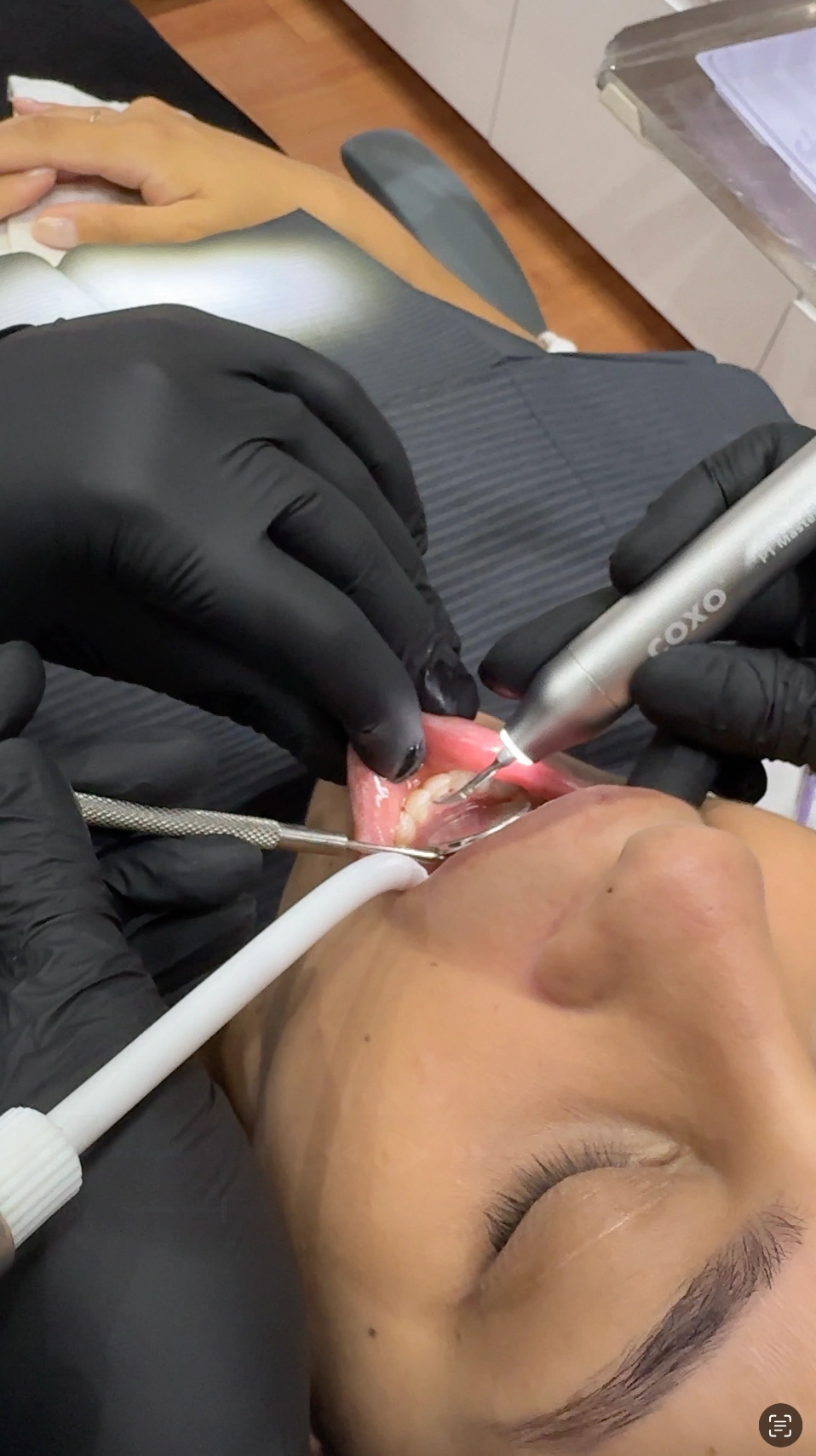
Professional scaling — removes what brushing alone can no longer handle.
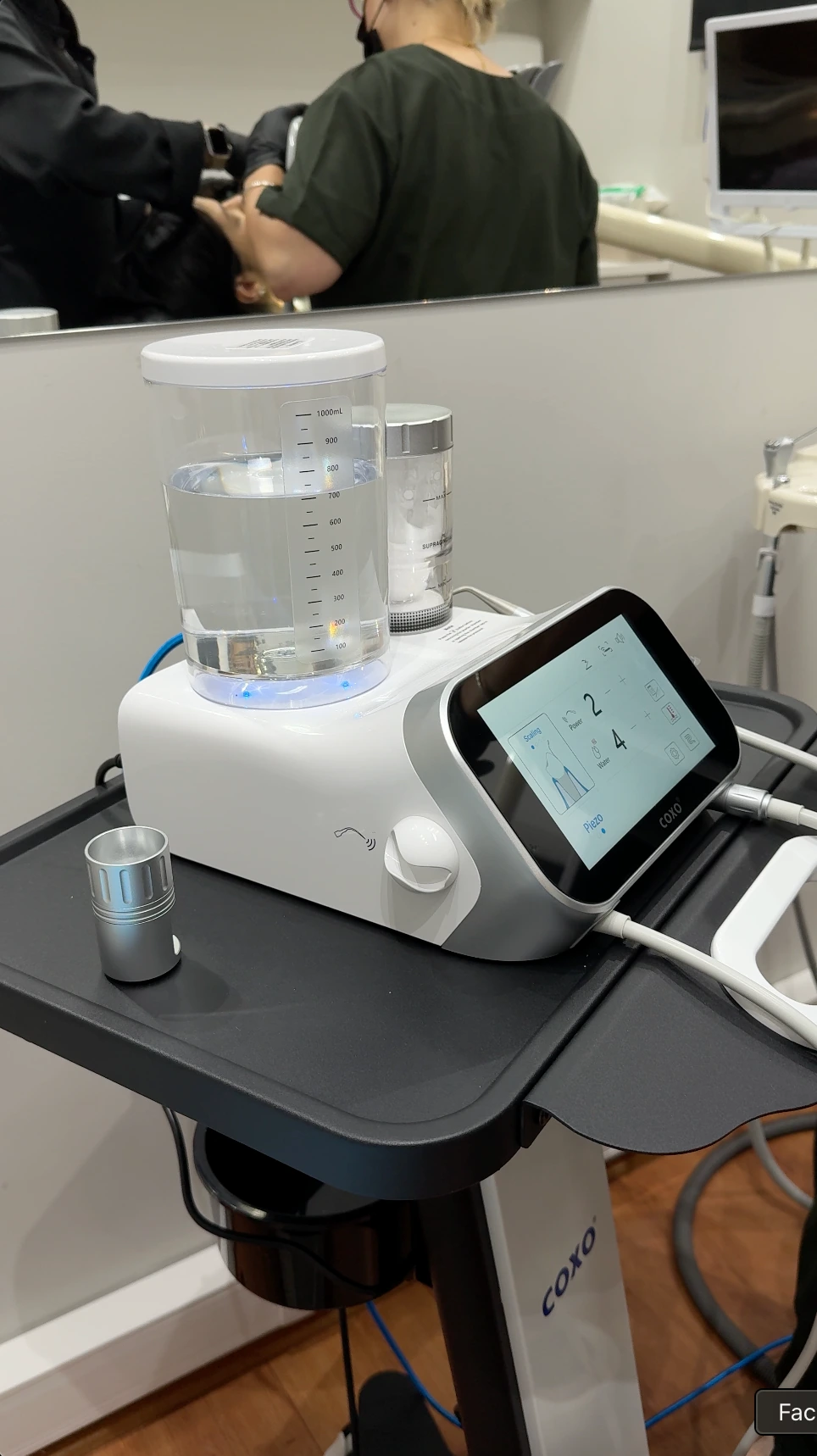
The system used at Porto Smile combines ultrasound, heated water and air polishing.
Periodontal therapy at Porto Smile (video in Portuguese)
Whatever the stage, the goal is always the same: stop the disease from progressing and, whenever possible, restore health to the tissue that’s already been affected.
Prevention: caring for your gums day to day
The good news is that preventing gum disease is, to a large extent, within your control:
- Brush your teeth at least twice a day, with proper technique and without rushing
- Floss or use interdental brushes daily — this is where brushing alone doesn’t reach
- Avoid smoking, one of the most decisive risk factors
- Keep up routine check-ups and regular scaling, even without symptoms
- If you have diabetes, keep it well controlled — it protects your oral health too
Why you shouldn’t ignore bleeding gums
There’s a deeper reason to take this seriously, beyond the teeth themselves: research has linked untreated gum disease to an increased risk of cardiovascular disease, poorer diabetes control, and, during pregnancy, a higher risk of preterm birth. The mouth doesn’t work in isolation from the rest of the body — and chronic inflammation, even if it seems to be “just” in the gums, has an impact that goes well beyond your smile.
That’s why bleeding gums should never be treated as a minor detail. It’s often the earliest and easiest-to-treat sign along the whole path of gum disease — which is exactly why it’s worth not ignoring it.
If your gums bleed regularly, the first step is simple: a periodontal assessment appointment, where we look at your specific case and explain exactly what to expect from treatment.
Frequently Asked Questions
Is it normal for my gums to bleed when I brush?
No. Healthy gums don’t bleed, even with more vigorous brushing. Bleeding is a sign of inflammation — in most cases, gingivitis — and should be assessed, even if it doesn’t happen often.
Can gingivitis be cured?
Yes. Gingivitis is fully reversible with good oral hygiene and, usually, a professional scaling. Periodontitis, on the other hand, involves bone loss and isn’t fully reversible, but it can be controlled and stabilised with proper treatment.
Does scaling hurt?
In most cases, it’s a well-tolerated procedure. At Porto Smile, we use a state-of-the-art system with heated water and a specific mode for periodontal treatment, which significantly reduces sensitivity during the procedure. For higher sensitivity, local anaesthesia can also be used to make the experience more comfortable.
How often should I get my teeth scaled?
For most people, once or twice a year is enough. Those more prone to tartar build-up, or with a history of gum disease, may need closer follow-up, decided on a case-by-case basis.
Can gum disease cause tooth loss?
Yes, it’s one of the leading causes of tooth loss in adults. When periodontitis progresses untreated, the bone supporting the tooth is gradually lost, until the tooth becomes unstable.
Does Porto Smile treat gum disease in Matosinhos?
Yes. We offer full periodontal assessment, scaling, root planing and ongoing follow-up for gingivitis and periodontitis cases. Call +351 229 388 709 to book an appointment at Rua Germano da Paiva 10, Matosinhos, Portugal.
Have questions about this topic? Our team is here to help.
Book a Consultation